Marine Vessels

involved in the transportation of weapons, stolen
Ukrainian products and in the circumvention of sanctions
Total number:
1468
Marine vessels
545
Masters
Updated: 23.09.2026
Maritime logistics is critically important for building up the aggressor`s military capabilities, moving troops, obtaining weapons and sanctioned goods, and trading stolen goods. Aggressors transport weapons through international straits on civilian merchant vessels. Exporting fossil fuels to circumvent sanctions is the main source of income for russia and Iran. The shadow tanker fleet and ships without ice class in the Arctic threaten an environmental disaster. Through the sale of agricultural products from the temporarily occupied Ukrainian territories, russia finances the war and maintains the loyalty of its allies, Iran and the DPRK.
Together we can stop this to restore peace and security
Actions to be taken
  • to sanction the vessels on the list below, as well as all related companies and individuals (owners, operators, managers, executives, senior crew members)
  • to prohibit the entry of such vessels into ports, territorial waters, EEZs and international straits, and the sale of spare parts for them
 
  • to increase and ensure compliance with environmental and safety requirements for tankers entering territorial waters, EEZs and international straits
  • to require bank statements to confirm compliance with the price-cap when receiving insurance and other services
View


Total: 1065
HERA
Vessel name
HERA
IMO
9326720
Flag (Current)
Vietnam Vietnam
Vessel Type
Crude Oil Tanker
Category
Transportation of fossil fuels in violation of sanctions and other restrictions
icon arrow-tree Transporting russian crude oil / petroleum products
During the period of the G7 and EU oil embargo and the price-cap policy on russian oil, the tanker has been involved in the export of russian oil mainly to India, making frequent calls to russian ports in the Black Sea.
The vessel was involved in the transportation of Iranian oil and has switched to transporting russian oil since June 2022. Since the beginning of russia's full-scale invasion of Ukraine in February 2022, more than 100 vessels that previously helped Iran export crude oil assist russia to transport russian crude oil / petroleum products. Many tankers involved in transporting Iranian oil to countries such as China are also involved in Venezuelan trade, including tanker IMO 9326720. On June 11, 2022, Venezuelan leader Nicolás Maduro and former Iranian President Ebrahim Raisi signed a 20-year cooperation agreement to expand ties in the oil and petrochemical industries, as well as in the military and economic spheres. Since then, bilateral ties have begun to develop. Most cargo is transported by ships belonging to the sanctioned National Iranian Tanker Company (NITC) in both directions. A significant number of ships flying under foreign (non-Iranian) flags are also involved in this trade.
The international public organization Greenpeace refers to the tanker as a shadowy fleet of tankers transporting russian oil around the world and threatening the environment.
On May 9, 2025, the United Kingdom imposed sanctions on a tanker as part of restrictions on the russian shadow fleet.
Since May 21 and June 3, 2025, the EU and Switzerland respectively have imposed sanctions on the tanker for transporting crude oil/petroleum products originating in or exported from russia, using irregular shipping practices with a high degree of risk, as specified in Resolution A.1192(33) of the General Assembly of the International Maritime Organization.
In June 2025, Canada imposed sanctions on the vessel.
Since September 18, 2025, Australia has imposed sanctions on the vessel.
Since December 13, 2025, Ukraine has imposed sanctions on the vessel.
On February 21, 2026, Ukraine imposed sanctions on the master of the vessel.
View profile
DENEB
Vessel name
DENEB
IMO
9301524
Flag (Current)
Sierra Leone Sierra Leone
Vessel Type
Crude Oil Tanker
Category
Transportation of fossil fuels in violation of sanctions and other restrictions
icon arrow-tree Transporting russian crude oil / petroleum products
During the period of the G7 and EU oil embargo and the price-cap policy on russian crude oil, the tanker is involved in the export of russian oil from russian ports in the Pacific region, in the Black Sea, mainly to China and Turkey.
According to the data of United Against Nuclear Iran (UANI), which monitors Iranian-related tanker traffic using satellite data, the vessel was involved in the transportation of Iranian oil and switched to transporting russian oil. Since the beginning of russia's full-scale invasion of Ukraine in February 2022, more than 100 vessels that previously helped Tehran export Iranian export oil are now helping russia transport russian oil/oil products.
The international public organization Greenpeace refers to the tanker as a shadowy fleet of tankers transporting russian oil around the world and threatening the environment.
The shadow fleet of russia continues to generate multibillion-dollar revenues for the kremlin bypassing sanctions, disguising its activities under the flags of third countries, using complex schemes to conceal owners, and poses significant environmental threats with significant economic costs to coastal countries and/or the international community due to the outdated and inadequate insurance of shadow fleet tankers.
On May 09, 2025, the United Kingdom imposed sanctions on the tanker as part of the restrictions on the russian shadow fleet.
In June 2025, Canada imposed sanctions on the vessel.
From July 20, 2025, the EU imposed sanctions on a tanker for transporting crude oil/petroleum products that originate in russia or are exported from russia using irregular and high-risk shipping practices as set out in the International Maritime Organization General Assembly resolution A.1192 (33).
On August 12, 2025, Switzerland imposed sanctions on the vessel.
Since September 18, 2025, Australia has imposed sanctions on the vessel.
Since October 30, 2025, New Zealand has imposed sanctions on the tanker.
Since December 13, 2025, Ukraine has imposed sanctions on the vessel.
On February 21, 2026, Ukraine imposed sanctions on the master of the vessel.
View profile
MERU
Vessel name
MERU
IMO
9187227
Flag (Current)
Equatorial Guinea Equatorial Guinea
Vessel Type
Crude Oil Tanker
Category
Transportation of fossil fuels in violation of sanctions and other restrictions
icon arrow-tree Transporting russian crude oil / petroleum products
The tanker, during the period of the G7+ oil embargo and the price-cap policy on russian crude oil/oil products, is involved in the export of russian crude oil/oil products and in dark activities at sea.
The international non-governmental organization Greenpeace refers to the tanker as a shadowy fleet of tankers transporting russian oil around the world and threatening the environment.
According to the USA-based human rights group United Against Nuclear Iran (UANI), which monitors Iran-related tanker traffic using satellite data, the vessel was involved in the transportation of Iranian oil and switched to transporting russian oil in July 2023. Since the beginning of russia's full-scale invasion of Ukraine in February 2022, more than 100 vessels that previously helped Tehran export Iranian export oil are now helping russia transport russian oil/oil products. In May 2022, UANI first predicted that russia would turn to the 'ghost armada' to ensure oil flows to its Chinese partner.
Shadow fleet of russia continues to generate multibillion-dollar revenues for the kremlin bypassing sanctions, disguising its activities under the flags of third countries, using complex schemes to conceal owners, and poses significant environmental threats with significant economic costs to coastal countries and/or the international community due to the outdated and inadequate insurance of shadow fleet tankers.
On January 10, 2025, USA imposed sanctions on the vessel.
On May 20, 2025, the EU imposed sanctions, which enter into force on May 21, 2025, on the tanker for the transportation of crude oil/petroleum products originating in or exported from russia, using irregular high-risk shipping practices as specified in the International Maritime Organization General Assembly Resolution A.1192(33).
On June 03, 2025, the sanctions imposed by Switzerland on the vessel came into force.
On July 21, 2025, the United Kingdom imposed sanctions on the vessel.
In August 2025, Ukraine imposed sanctions on the tanker's master.
In November 2025, Canada imposed sanctions on the vessel.
Since December 13, 2025, Ukraine has imposed sanctions on the vessel.
View profile
AMBER 6
Vessel name
AMBER 6
IMO
9235713
Flag (Current)
unknown
Vessel Type
Crude Oil Tanker
Category
Transportation of fossil fuels in violation of sanctions and other restrictions
icon arrow-tree Transporting russian crude oil / petroleum products
In 2024, the tanker will be involved in the export of russian oil to China from the port of Kozmino.
The vessel is certified by the Korean Register (IACS).
According to Lloyd's List, 'AMBER 6' is linked to anonymous Chinese buyers who spent about $376 million to purchase 13 tankers to carry out risky ship-to-ship transportation of russian oil in the middle of the Atlantic Ocean. Ship-to-shore logistics hubs are a common feature of the scheme, allowing for the concealment of ownership and origin of cargo. In addition to the mid-Atlantic STS hub, there are also areas near the ports of Kalamata (Greece), Malta, Ceuta, and the Caucasus where ship-to-ship operations have been established for russian oil. STS's operations in the middle of the Atlantic Ocean are outside the jurisdiction of port authorities, with limited technical and operational oversight, which increases safety and environmental concerns due to the unknown insurance and vessel ownership data.
Lloyd's List has tracked five Aframax tankers, seven large oil carriers and one Suezmax vessel to an anonymous buyer through separate but related companies operating offshore Hong Kong and China that own similar vessels. The group of tankers was acquired between May and July 2022 for a total of $285 million, based on ship brokerage reports and market valuations. Since then, all but one of the tankers have been involved in the transshipment of russian oil cargoes at a high-risk transshipment hub located 860 nautical miles west of Portugal in international waters. The vessels purchased by the anonymous Chinese buyer are 15 years old or more, making it impossible for most major oil companies to charter them and impossible to obtain conventional financing.
Oil exports from russia are the most important source of income for the kremlin regime to finance its war against Ukraine. The tax on oil production collected by the russian federation in 2023 amounted to 8.9 trillion rubles, or 31% of total federal revenues. According to CREA data for September 2024, russia's revenues from crude oil exported by sea amounted to 192 million euros per day, 86% of the total volume of russian marine crude oil was transported by shadow tankers, while tankers owned or insured in countries that impose price restrictions accounted for 14% of the total value of russian oil exported in September.
The shadow tanker fleet continues to provide multibillion-dollar revenues for the kremlin bypassing sanctions, disguising its activities under the flags of third countries, using complex schemes to conceal owners, and poses significant environmental threats with significant economic costs to coastal countries and/or the international community due to the outdated and inadequate insurance of shadow fleet tankers.
On December 16, 2024, the EU imposed sanctions on the tanker (effective from December 17, 2024) due to the transportation of crude oil or petroleum products originating in or exported from russia, using irregular high-risk shipping practices as set out in the International Maritime Organization General Assembly Resolution A.1192(33).
On December 23, 2024, Switzerland imposed sanctions on the vessel in connection with the transportation of crude oil or petroleum products originating in or exported from russia, using irregular and risky shipping practices, as set out in the resolution of the General Assembly of the International Maritime Organization A.1192(33).
On January 10, 2025, USA imposed sanctions on the vessel.
In June 2025, Canada imposed sanctions on the vessel.
On July 21, 2025, the United Kingdom imposed sanctions on the vessel.
In August 2025, Ukraine imposed sanctions on the tanker's master.
Since December 13, 2025, Ukraine has imposed sanctions on the vessel.
View profile
BENEDICT
Vessel name
BENEDICT
IMO
9293155
Flag (Current)
Cameroon Cameroon
Vessel Type
Crude Oil Tanker
Category
Transportation of fossil fuels in violation of sanctions and other restrictions
icon arrow-tree Transporting russian crude oil / petroleum products
The tanker during the period of the G7 and EU oil embargo and price cap policy on russian oil has been involved since January 2024 in the export of russian oil from russian ports in the Baltic Sea to third countries.
The international NGO Greenpeace refers to the tanker as part of a shadow fleet of tankers transporting russian oil around the world and threatening the environment.
The vessel is also involved in the transportation of Iranian crude oil and petroleum products.
On December 17, 2024, the United Kingdom imposed sanctions on the vessel.
On February 21, 2025, Canada imposed sanctions on the vessel.
Since May 21 and June 3, 2025, the EU and Switzerland, respectively, have imposed sanctions on the vessel for transporting crude oil/petroleum products originating in or exported from rRussia, using irregular shipping practices with a high degree of risk, as specified in Resolution A.1192(33) of the General Assembly of the International Maritime Organization.
In June 2025, Australia imposed sanctions on the vessel.
Since October 30, 2025, New Zealand has imposed sanctions on the tanker.
Since December 13, 2025, Ukraine has imposed sanctions on the vessel.
On February 6, 2026, the US imposed sanctions on a tanker for transporting Iranian oil/oil products.
On February 21, 2026, Ukraine imposed sanctions on the master of the vessel.
View profile
CECILA
Vessel name
CECILA
IMO
9247792
Flag (Current)
Sierra Leone Sierra Leone
Vessel Type
Crude Oil Tanker
Category
Transportation of fossil fuels in violation of sanctions and other restrictions
icon arrow-tree Transporting russian crude oil / petroleum products
During the period of the G7 and EU oil embargo and the price-cap policy on russian oil, the tanker is involved in the export of oil to India and other third countries from russian ports in the Baltic and Black Seas, and resorts to the practice of turning off the AIS signal, conducting so-called "dark activities" at sea.
The international NGO Greenpeace refers to the tanker as part of a shadow fleet of tankers transporting russian oil around the world through the Baltic Sea, the Kadetsky Canal area in the Bay of Mecklenburg, and threatening the environment.
The vessel is also involved in the transportation of Iranian crude oil and petroleum products. Since russia's full-scale invasion of Ukraine in February 2022, more than 100 vessels that previously helped Iran export oil are now helping russia transport russian crude oil and petroleum products. Many tankers involved in transporting Iranian oil to countries such as China are also involved in Venezuelan trade, including tanker IMO 9247792. On June 11, 2022, Venezuelan leader Nicolás Maduro and former Iranian President Ebrahim Raisi signed a 20-year cooperation agreement to expand ties in the oil and petrochemical industries, as well as in the military and economic spheres. Since then, bilateral ties have begun to develop. Most cargo is transported by ships belonging to the sanctioned National Iranian Tanker Company (NITC) in both directions. A significant number of ships flying under foreign (non-Iranian) flags are also involved in this trade.
On May 9, 2025, the United Kingdom imposed sanctions on a tanker as part of restrictions on the russian shadow fleet.
Since May 21 and June 3, 2025, the EU and Switzerland, respectively, have imposed sanctions on the vessel for transporting crude oil/petroleum products originating in or exported from rRussia, using irregular shipping practices with a high degree of risk, as specified in Resolution A.1192(33) of the General Assembly of the International Maritime Organization.
In June 2025, Canada imposed sanctions on the vessel.
Since September 18, 2025, Australia has imposed sanctions on the vessel.
Since October 30, 2025, New Zealand has imposed sanctions on the tanker.
Since December 13, 2025, Ukraine has imposed sanctions on the vessel.
On February 21, 2026, Ukraine imposed sanctions on the master of the vessel.
View profile
HANSON
Vessel name
HANSON
IMO
9237412
Flag (Current)
unknown
Vessel Type
Crude Oil Tanker
Category
Transportation of fossil fuels in violation of sanctions and other restrictions
icon arrow-tree Transporting russian crude oil / petroleum products
The tanker, during the period of the G7 and EU oil embargo and the price cap policy on russian crude oil, is involved in the export of russian Urals and ESPO crude oil to China and India from the russian ports of Primorsk and Ust-Luga on the Baltic Sea, and Kozmino in the Pacific region on behalf of PJSC Lukoil, PJSC Gazprom, and PJSC Surgutneftegaz.
The tanker is also involved in the transportation of Iranian petroleum products. Since early 2024, the tanker has transported tens of thousands of metric tons of fuel oil on behalf of the sanctioned National Iranian Oil Company (NIOC) to China.
The international non-governmental organization Greenpeace classifies the tanker as part of russia’s shadow fleet.
On March 13, 2025, the United States imposed sanctions on the vessel as part of restrictions targeting Iran’s oil and petrochemical sectors.
On December 19, 2025, and January 13, 2026, the EU and Switzerland, respectively, imposed sanctions on the tanker for transporting crude oil, petroleum products, or mineral products originating in or exported from russia, as well as for engaging in high-risk shipping practices as defined by Resolution A.1192 (33) of the General Assembly of the International Maritime Organization.
On December 13, 2025, Ukraine imposed sanctions on the vessel.
On February 24, 2026, the United Kingdom imposed sanctions on the vessel.
On June 12, 2026, Canada imposed sanctions on the tanker.
The tanker engages in deceptive shipping practices by manipulating its identifying information—its name and flag state.
View profile
VOLANS
Vessel name
VOLANS
IMO
9422988
Flag (Current)
unknown
Vessel Type
Crude Oil Tanker
Category
Transportation of fossil fuels in violation of sanctions and other restrictions
icon arrow-tree Transporting russian crude oil / petroleum products
The tanker during the period of the G7 and EU oil embargo and the price cap policy on russian crude oil/petroleum products is involved in the export of russian crude oil/petroleum products, and resorts to deceptive, high-risk practices (disabling AIS, conducting dark activities near Malaysia, making STS transmissions with russian affiliation).
In early January 2023, the tanker IMO 9422988 made an STS transmission in international waters of the South Korean anchorage with the help of the russian tanker IMO 9301407 (under sanctions since January 2025, affiliated with the sanctioned russian company PJSC Sovcomflot), which had previously been loaded at the russian oil terminal De-Kastri.
The tanker IMO 9422988 is involved in an established chain of supply of russian crude oil/petroleum products to third countries by making STS transfers in the area near European countries, in particular, with the sanctioned tanker IMO 9247443, which since July 2024 has been operating in the area near Greece, Cyprus as a transshipment STS hub for russian crude oil/petroleum products, which are transported by tankers mainly from the russian ports of Tuapse, Novorossiysk, Taman crude oil/petroleum products transshipment complex for transshipment near European countries. In January and March 2025, tanker IMO 9422988 conducted STS transmissions with tanker IMO 9247443 near Greece and Cyprus, respectively. There are other STS transfers near Cyprus and Greece in 2025 with other tankers of the russian shadow fleet (IMO 9352195, IMO 9314882, IMO 9263203, IMO 9299862, IMO 9198290, IMO 9424651), which were sanctioned by the EU, Switzerland, and the United Kingdom in May 2025.
Transshipment of crude oil/petroleum products of russian origin by STS method at sea allows concealing the ownership and origin of the cargo, legalizing their supply to the EU, USA and other countries. In turn, the sale of crude oil/petroleum products on the world market allows the russian state budget to accumulate significant financial resources, which are used, among other things, to build up the military potential of the aggressor state and to provide material support for russia's military operations on the territory of Ukraine.
The tanker is involved in the transportation of Iranian oil to Chinese refineries, for which it was sanctioned by USAA in March 2025.
On May 09, 2025, the United Kingdom imposed sanctions on the tanker as part of the restrictions on the shadow fleet of the russian federation, including for engaging in activities aimed at destabilizing Ukraine, undermining/threatening the territorial integrity, sovereignty or independence of Ukraine or benefiting from or supporting the government of russia, and participating in the transportation of crude oil/petroleum products of russian origin, in particular, from russia to a third country.
Since September 18, 2025, Australia has imposed sanctions on the vessel.
At the end of 2025, the tanker was used by Trafigura to transport Venezuelan oil to the US as part of US-imposed controls on Venezuelan oil.
Since December 13, 2025, Ukraine has imposed sanctions on the vessel.
On June 12, 2026, Canada imposed sanctions on the vessel.
View profile
KOALA
Vessel name
KOALA
IMO
9234642
Flag (Current)
unknown
Vessel Type
Crude Oil Tanker
Category
Transportation of fossil fuels in violation of sanctions and other restrictions
icon arrow-tree Transporting russian crude oil / petroleum products
During the G7 and EU oil embargo and price cap policy on russian crude oil/petroleum products, the tanker is involved in the export of russian crude oil/petroleum products and is actively engaged in shady activities in the Kerch Strait area.
The international non-governmental organization Greenpeace classifies the tanker as part of a shadow fleet of tankers that transport russian oil around the world and threaten the environment. The tanker is linked to an incident that threatens environmental safety in the Gulf of Finland and poses significant risks to coastal countries. In February 2025, explosions occurred in the engine room of the tanker loaded with fuel oil at the port of Ust-Luga. The ship's crew of 24 managed to reach the shore without injury, but as a result of the incident, the ship ran aground with its stern, and the russian Ministry of Emergency Situations set up boom barriers around the ship. The Federal Agency for Maritime and River Transport of russia stated that the tanker's cargo holds were not damaged and there was no leakage of oil products.
The tanker is involved in the transportation of Iranian oil. Since the start of russia's full-scale invasion of Ukraine in February 2022, more than 100 ships that previously helped Iran export oil are now helping russia transport russian crude and petroleum products.
Many tankers involved in transporting Iranian oil to countries such as China are involved in Venezuelan trade, including tanker IMO 9234642. On June 11, 2022, Venezuelan leader Nicolás Maduro and former Iranian President Ebrahim Raisi signed a 20-year cooperation agreement to expand ties in the oil and petrochemical industries, as well as in the military and economic spheres. Since then, bilateral relations have begun to develop. Most cargoes are transported by vessels of the sanctioned National Iranian Tanker Company (NITC) in both directions. A significant number of vessels flying foreign (non-Iranian) flags are also involved in this trade.
The tanker is affiliated with the sanctioned Cypriot company Lagosmarine Limited, which was the tanker's manager. In January 2025, the US imposed sanctions on Lagosmarine Limited for its activities in the russian energy sector and as the technical manager of a tanker that transported crude oil and made several calls at a russian port where the price of oil consistently exceeded the price cap.
Since May 21 and June 3, 2025, the EU and Switzerland have imposed sanctions on tankers transporting crude oil/petroleum products originating in or exported from кussia, using irregular shipping practices with a high degree of risk, as specified in Resolution A.1192(33) of the General Assembly of the International Maritime Organization.
Since December 13, 2025, Ukraine has imposed sanctions on the vessel.
Since March 25, 2026, Canada has imposed sanctions on the vessel.
View profile
CHIOS
Vessel name
CHIOS
IMO
9231509
Flag (Current)
unknown
Vessel Type
Crude Oil Tanker
Category
Transportation of fossil fuels in violation of sanctions and other restrictions
icon arrow-tree Transporting russian crude oil / petroleum products
During the period of the G7+ oil embargo and the price cap on russian oil/oil products, the tanker is involved in the export of russian oil to third countries, in particular from russian ports in the Baltic Sea.
The vessel is certified by DNV (IACS).
The tanker is affiliated with the sanctioned PJSC Sovcomflot (beneficial owner), the largest state-owned shipping company in russia, a key company for servicing and supporting offshore hydrocarbon production, transportation of russian oil, oil products, and liquefied natural gas amid the application of sanctions restrictions to russia after its full-scale invasion of Ukraine. The services provided by PJSC Sovcomflot are a significant source of income for russia, as more than 70% of russia's revenues come from energy sales, which allows it to finance its war against Ukraine. The main charterers of Sovcomflot's vessels are russia's largest oil and gas companies and traders. Sovcomflot is involved in servicing major oil and gas projects in russia: 'Sakhalin-1', ‘Sakhalin-2’, ‘Varandey’, ‘Prirazlomnoye’, ‘Novy Port’, ‘Yamal LNG’ and others. Prior to russia's full-scale invasion of Ukraine, the company's fleet consisted of about 145 vessels. After the sanctions were imposed, Sovcomflot transferred dozens of vessels to the ownership of companies it had set up, including in foreign jurisdictions, in order to circumvent them, and began the practice of constantly ‘juggling’ (transferring) vessels to related companies. According to experts, the tankers ‘re-registered’ by Sovcomflot to related companies are part of the so-called ‘shadow tanker fleet’ of the russian federation to continue selling russian oil, oil products, and liquefied gas under western sanctions.
According to the American human rights group United Against Nuclear Iran (UANI), which monitors tanker traffic related to Iran using satellite data, the vessel was involved in the transportation of Iranian oil.
On May 09, 2025, the United Kingdom imposed sanctions on the tanker as part of the restrictions on the shadow fleet of the russian federation, including for engaging in activities aimed at destabilizing Ukraine, undermining/threatening the territorial integrity, sovereignty or independence of Ukraine or benefiting from or supporting the government of russia, and participating in the transportation of crude oil/petroleum products of russian origin, in particular, from russia to a third country.
On May 20, 2025, the EU imposed sanctions, which will enter into force on May 21, 2025, on the tanker for the transportation of crude oil/petroleum products originating in or exported from russia, using irregular high-risk shipping practices as specified in the International Maritime Organization General Assembly Resolution A.1192(33).
On June 03, 2025, the sanctions imposed by Switzerland on the vessel came into force.
In June 2025, Canada imposed sanctions on the vessel.
Since September 18, 2025, Australia has imposed sanctions on the vessel.
Since December 13, 2025, Ukraine has imposed sanctions on the vessel.
On February 21, 2026, Ukraine imposed sanctions on the master of the vessel.
View profile
STELLAR BEVERLY
Vessel name
STELLAR BEVERLY
IMO
9208069
Flag (Current)
Cameroon Cameroon
Vessel Type
Crude Oil Tanker
Category
Transportation of fossil fuels in violation of sanctions and other restrictions
icon arrow-tree Transporting russian crude oil / petroleum products
The tanker during the period of the G7+ oil embargo and the price cap policy on russian crude oil/oil products is involved in the export of russian crude oil/oil products from russian ports in the Baltic and Black Seas, and is engaged in dark activities, in particular in the Black Sea south of the TOT of Crimea.
The international NGO Greenpeace refers to the tanker as part of a shadow fleet of tankers transporting russian oil around the world and threatening the environment.
The tanker was affiliated with Ocean Coral Ship Management LTD, which managed the tanker IMO 9208069, until USA sanctioned on January 10, 2025, a significant number of ships considered to be shadow fleet. On January 10, 2025, USA imposed sanctions on the tanker IMO 9266853, which is considered to be part of the shadow fleet, called at the russian port where the oil price constantly exceeds the upper limit of the price cap, and was managed by Ocean Coral Ship Management LTD as of the date of sanctions. In order to avoid the application of sanctions to the tanker IMO 9208069 involved in sanctioned trade, after the adoption of the sanctions package by USA on January 10, 2025, the management of the tanker IMO 9208069 was transferred from Ocean Coral Ship Management LTD (Hong Kong), which was incorporated on January 24, 2024, to Elite Marine Ship Management LTD (Hong Kong), which was incorporated on July 24, 2024.
On May 20, 2025, the EU imposed sanctions, which enter into force on May 21, 2025, on the tanker for the transportation of crude oil/petroleum products originating in or exported from russia, using irregular high-risk shipping practices as specified in the International Maritime Organization General Assembly Resolution A.1192(33).
On June 03, 2025, the sanctions imposed by Switzerland on the vessel came into force.
In June 2025, Canada imposed sanctions on the vessel.
On July 21, 2025, the United Kingdom imposed sanctions on the vessel.
Since October 30, 2025, New Zealand has imposed sanctions on the tanker.
Since December 13, 2025, Ukraine has imposed sanctions on the vessel.
On February 21, 2026, Ukraine imposed sanctions on the master of the vessel.
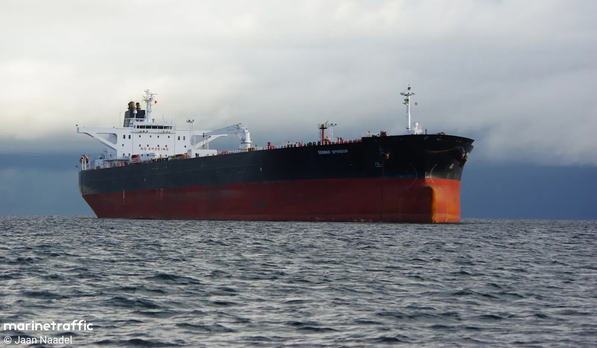
On April 24, 2026, the United States imposed sanctions on a tanker for transporting Iranian crude oil to China.
View profile
To top