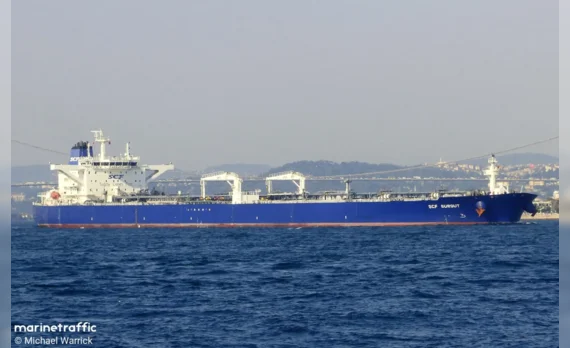
Shadow Fleet

Marine vessels involved in the transportation of sanctioned oil
Total number:
1488
Marine vessels
545
Masters
Updated: 10.10.2026
The shadow tanker fleet transports growing volumes of sanctioned oil around the world, generates billions of dollars in revenue for russia and Iran, threatens environmental safety in the oceans, serves as a spy platform, and is used for sabotage activities in the interests of the aggressor.
The sanctioned countries are looking for new markets for oil, building up their tanker fleet to circumvent restrictions, and shipping crude oil mainly to China and India.
The shadow tanker fleet with a total deadweight of more than 100 million tons (approximately 17% of the world`s oil tanker fleet) consists of more than a thousand mostly outdated, poorly maintained vessels without proper insurance, with ‘confusing’ ownership and management structures located in ‘friendly’ jurisdictions, under ‘convenient’ flags. Such vessels resort to deceptive tactics at sea to conceal the origin of their cargo, threaten ‘environmental chaos’ and billions of dollars in losses to coastal countries by passing through busy, narrow international transportation routes without pilotage. Since the beginning of russia`s full-scale invasion of Ukraine, shadow tankers have already been involved in more than 50 incidents from the Danish Straits to Malaysia.


Category
Sanctions
 
 
DWT: 91 022 тис.тоннTotal: 896
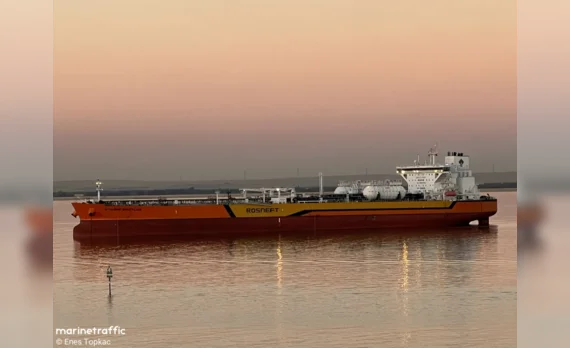
MIDVOLGA-3
Vessel name
MIDVOLGA-3
IMO
9735141
Flag (Current)
russian federation russian federation
Vessel Type
Oil Products Tanker
Category
Cargo transportation from/to ТОТ of Ukraine
icon arrow-tree Calling ports of the TOT
The tanker is involved in the export of russian oil/oil products from russian ports in the Black and Azov Seas, mainly to Turkey and Egypt, and uses deceptive practices (disabling AIS), including in the Kerch Strait area, calls at the port n the TOT of Crimea (the port on the shores of the Kerch Strait, located near the village of Zhukivka, is part of the Kerch ferry service (the line from the port of Crimea to the port of Caucasus), in 2014-2015 the port was dredged, which increased the capacity of the line).
The vessel is owned by the russian company Middle-Volga Shipping Company LLC (under Ukrainian sanctions), which is a supplier to the sanctioned Rosnefteflot JSC (under at least two contracts worth 94.4 million rubles) within the russian state procurement system. Rosnefteflot JSC is a part of the group of the sanctioned russian PJSC Rosneft Oil Company, a russian state-owned oil and gas company, one of the world's largest oil producers. The main activities of Rosnefteflot JSC are, in particular, chartering of the tanker fleet for the benefit of Rosneft, organization of river transportation in the interests of Rosneft in the Volga-Don, Azov-Don, Volga and Volga-Baltic basins.
Since July 24, 2026, the EU has imposed sanctions on the vessel.
On October 8, 2026, the United Kingdom imposed sanctions on this vessel.
View profile
OKEANSKY PROSPECT
Vessel name
OKEANSKY PROSPECT
IMO
9866380
Flag (Current)
russian federation russian federation
Vessel Type
Crude Oil Tanker
Category
Transportation of fossil fuels in violation of sanctions and other restrictions
icon arrow-tree Transporting russian crude oil / petroleum products
The tanker is involved in the export of russian oil from russian ports in the Baltic Sea, mainly to India.
The new generation Arfamax LNG tanker, built in 2022, is part of the fleet of the sanctioned russian state-owned shipping company Sovcomflot (SCF Group). The vessel has a carrying capacity of 112,650 tons and was built at the sanctioned russian shipbuilding complex Zvezda in Primorsky Krai with funds from the sanctioned russian state development corporation VEB.rf. The ice-class 1A/1B tanker is 250 m long and 44 m wide and is capable of year-round transportation of oil from areas with difficult ice conditions, including ports in the russian Far East and Baltic basin. The vessel is believed to be chartered by Rosneft under a long-term agreement.
On December 16, 2024, the EU imposed sanctions on the tanker (effective from December 17, 2024) due to the transportation of crude oil or petroleum products originating in or exported from russia, using irregular high-risk shipping practices as set out in the International Maritime Organization General Assembly Resolution A.1192(33).
On December 23, 2024, Switzerland imposed sanctions on the vessel in connection with the transportation of crude oil or petroleum products originating in or exported from russia, using irregular and risky shipping practices, as set out in the resolution of the General Assembly of the International Maritime Organization A.1192(33).
On January 10, 2025, USA imposed sanctions on the vessel.
In June 2025, Canada imposed sanctions on the vessel.
On July 21, 2025, the United Kingdom imposed sanctions on the vessel.
In August 2025, Ukraine imposed sanctions on the tanker's master.
Since December 13, 2025, Ukraine has imposed sanctions on the vessel.
On October 2, 2026, Japan imposed sanctions on the vessel.
View profile
TRUST
Vessel name
TRUST
IMO
9382798
Flag (Current)
russian federation russian federation
Vessel Type
Oil Products Tanker
Category
Transportation of fossil fuels in violation of sanctions and other restrictions
icon arrow-tree Transporting russian crude oil / petroleum products
During the period of the G7+ oil embargo and the russian oil price ceiling, the tanker is involved in the export of russian oil from russian facilities, in particular, in the Baltic Sea to third countries.
The vessel, through its related companies, including Fornax Ship Management, the sanctioned companies Oil Tankers SCF MGMT FZCO, Sun Ship Management, SCF Management Services Cyprus, is affiliated with the sanctioned PJSC Sovcomflot, the largest state-owned shipping company in russia, a key company for servicing and supporting offshore hydrocarbon production, transportation of russian oil, petroleum products, liquefied natural gas amidst the application of sanctions restrictions to the russian federation after its full-scale invasion of Ukraine. The services provided by Sovcomflot are a significant source of income for russia, as more than 70% of russia's revenues come from the sale of energy, which allows it to finance its war against Ukraine. The main charterers of Sovcomflot vessels are the largest oil and gas companies and traders in russia. Sovcomflot is involved in servicing major oil and gas projects in russia: 'Sakhalin-1', 'Sakhalin-2', 'Varandey', 'Prirazlomnoye', 'Novy Port', 'Yamal LNG' and others. Prior to russia's full-scale invasion of Ukraine, the company's fleet consisted of about 145 vessels. After the sanctions were imposed, Sovcomflot transferred dozens of vessels to the ownership of companies it had set up, including in foreign jurisdictions, in order to circumvent them, and began the practice of constantly 'juggling' (transferring) vessels to related companies. According to expert estimates, the tankers 'transferred' by Sovcomflot to related companies are part of the so-called 'shadow tanker fleet' of the russian federation to continue selling russian oil, oil products, and liquefied gas under western sanctions.
On December 16, 2024, the EU imposed sanctions on the vessel (effective December 17, 2024).
On December 23, 2024, Switzerland imposed sanctions on the vessel.
On January 10, 2025, USA imposed sanctions on the vessel.
In June 2025, Canada imposed sanctions on the vessel.
On July 21, 2025, the United Kingdom imposed sanctions on the vessel.
In August 2025, Ukraine imposed sanctions on the tanker's master.
Since December 13, 2025, Ukraine has imposed sanctions on the vessel.
On October 2, 2026, Japan imposed sanctions on the vessel.
View profile
GARNET
Vessel name
GARNET
IMO
9577094
Flag (Current)
Oman Oman
Vessel Type
Crude Oil Tanker
Category
Transportation of fossil fuels in violation of sanctions and other restrictions
icon arrow-tree Transporting russian crude oil / petroleum products
During the period of the oil embargo and the G7+ countries’ price cap policy on russian crude oil and petroleum products, the tanker is involved in the export of russian petroleum products from the ports of Primorsk and Vysotsk to Venezuela, Turkey, and Brazil.
The vessel, through affiliated companies, in particular Fornax Ship Management, Sun Ship Management, and Oil Tankers SCF MGMT FZCO, is affiliated with PJSC "Sovcomflot"—russia’s largest state-owned shipping company providing services and support for offshore hydrocarbon production and the transportation of russian crude oil, petroleum products, and liquefied gas. The main charterers of PJSC Sovcomflot’s vessels are russia’s largest oil and gas companies and traders. Sovcomflot PJSC participates in the servicing of major oil and gas projects in russia: "Sakhalin-1", "Sakhalin-2", "Varanдей", "Prirazlomnoye", "Novy Port", "Yamal LNG" and others.
Since December 17, 2024, the EU has imposed sanctions on the vessel.
Since December 23, 2024, Switzerland has imposed sanctions on the vessel.
Since January 10, 2025, the U.S. has imposed sanctions on the vessel.
In June 2025, Canada imposed sanctions on the vessel.
On July 21, 2025, the United Kingdom imposed sanctions on the vessel.
On August 3, 2025, Ukraine imposed sanctions on the tanker’s master.
As of December 13, 2025, Ukraine imposed sanctions on the vessel.
Additionally, during the fuel crisis, the tanker is involved in a scheme to supply petroleum products to the russian federation from the Vadinar Refinery owned by Nayara Energy, a 49.13% stake in which is controlled by the russian sanctioned company PJSC Oil Company "Rosneft".
In early August 2026, the tanker IMO 9577094, under the command of master Mykola Borysovych Posmitny (russian citizen, under Ukrainian sanctions), delivered more than 57,000 metric tons of gasoline from the Vadinar Refinery of Nayara Energy to Vitino. The tanker received this strategic cargo in the Damietta area near Egypt via a ship-to-ship transfer from the shadow tanker IMO 9314167 (sanctioned by the United Kingdom, Canada, the EU, Switzerland, Ukraine and Australia). Following the uncovering of gray-market fuel import schemes from India, the tanker IMO 9314167 not only changed its name to CYCLONE and its flag state to the russian federation but also continues to deliver gasoline from Nayara Energy’s Vadinar Refinery to a transshipment area near Egypt.
According to available information, in early September 2026, a second ship-to-ship transfer of cargo from the Vadinar refinery will take place in the area near Egypt between the tankers CYCLONE (formerly AGNI, IMO 9314167) and GARNET (IMO 9577094).
On October 2, 2026, Japan imposed sanctions on the vessel.
View profile
PREMIER
Vessel name
PREMIER
IMO
9577082
Flag (Current)
russian federation russian federation
Vessel Type
Crude Oil Tanker
Category
Transportation of fossil fuels in violation of sanctions and other restrictions
icon arrow-tree Transporting russian crude oil / petroleum products
The tanker is involved in the export of russian crude oil/petroleum products to third countries during the period of the G7 and EU oil embargo and the price cap policy on russian crude oil/petroleum products.
The vessel, through affiliated companies, including Fornax Ship Management (UAE, under US and Ukrainian sanctions), Oil Tankers SCF MGMT FZCO (UAE, under US, UK, and Ukrainian sanctions), Sun Ship Management, affiliated with the sanctioned PJSC Sovcomflot — russia's largest state-owned shipping company providing services and support for offshore hydrocarbon production and the transportation of russian crude oil, petroleum products, and liquefied natural gas. The main charterers of Sovcomflot PJSC vessels are russia's largest oil and gas companies and traders. Sovcomflot PJSC is involved in servicing major oil and gas projects in russia: Sakhalin-1, Sakhalin-2, Varandey, Prirazlomnoye, Novy Port, Yamal LNG, and others.
Since December 17 and 23, 2024, the EU and Switzerland have imposed sanctions on the vessel.
On January 10, 2025, the US imposed sanctions on the tanker.
In June 2025, Canada imposed sanctions on the vessel.
On July 21, 2025, the United Kingdom imposed sanctions on the vessel.
In August 2025, Ukraine imposed sanctions on the tanker's master.
The tanker is likely involved in facilitating the export of Venezuelan oil. According to data from January 2026, the ship was in the Caribbean Sea. On January 6, 2026, the tanker left the Jose Terminal in Venezuela. As of January 11–12, 2026, the ship was spotted south of the Dominican Republic. On December 22, 2025, the tanker changed its flag from Gambia to the russian federation. It happened in the background of a mass re-registration of ships of the "shadow fleet" in the russian register to get protection from interceptions of US Navy ships entering/leaving ports of Venezuela.
Since December 13, 2025, Ukraine has imposed sanctions on the vessel.
On October 2, 2026, Japan imposed sanctions on the vessel.
View profile
SOUFIA 1
Vessel name
SOUFIA 1
IMO
9273052
Flag (Current)
unknown
Vessel Type
Crude Oil Tanker
Category
Transportation of fossil fuels in violation of sanctions and other restrictions
icon arrow-tree Transporting russian crude oil / petroleum products
During the oil embargo and price cap policy on russian crude oil/petroleum products, the tanker is involved in the export of russian crude oil/petroleum products, including through STS transfers in the area of the Gulf of Laconikos.
The tanker called at a russian port where the price of russian oil consistently exceeded the price cap of $60 per barrel.
The international non-governmental organization Greenpeace classifies the tanker as part of the shadow fleet of tankers that transport russian oil around the world and threaten the environment.
The vessel is also involved in the transportation of Iranian crude oil/petroleum products. Since the start of russia's full-scale invasion of Ukraine in February 2022, more than 100 vessels that previously helped Iran export oil are now helping russia transport russian crude oil/petroleum products.
Many tankers involved in transporting Iranian oil to countries such as China are involved in Venezuelan trade, including tanker IMO 9273052. On June 11, 2022, Venezuelan leader Nicolás Maduro and former Iranian President Ebrahim Raisi signed a 20-year cooperation agreement to expand ties in the oil and petrochemical industries, as well as in the military and economic spheres. Since then, bilateral ties have begun to develop. Most cargoes are transported by vessels of the sanctioned National Iranian Tanker Company (NITC) in both directions. A significant number of vessels flying under foreign (non-Iranian) flags are also involved in this trade.
Since December 17 and 23, 2024, the EU and Switzerland have imposed sanctions on the tanker for transporting crude oil or petroleum products originating in or exported from russia, using irregular shipping practices with a high degree of risk, as specified in Resolution A.1192(33) of the General Assembly of the International Maritime Organization.
On January 10, 2025, the US imposed sanctions on the vessel.
On May 9, 2025, the United Kingdom imposed sanctions on the tanker.
In June 2025, Canada imposed sanctions on the vessel.
Since September 18, 2025, Australia has imposed sanctions on the vessel.
Since December 13, 2025, Ukraine has imposed sanctions on the vessel.
On February 20, 2026, New Zealand imposed sanctions on the vessel.
On February 21, 2026, Ukraine imposed sanctions on the master of the vessel.
On October 2, 2026, Japan imposed sanctions on the vessel.
View profile
AREIA
Vessel name
AREIA
IMO
9321847
Flag (Current)
unknown
Vessel Type
Crude Oil Tanker
Category
Transportation of fossil fuels in violation of sanctions and other restrictions
icon arrow-tree Transporting russian crude oil / petroleum products
In 2024, the tanker is involved in the export of russian oil to China from the russian ports of the Pacific region Kozmino and Nakhodka.
The international non-governmental organization Greenpeace refers to the tanker as a shadowy fleet of tankers that transport russian oil around the world and threaten the environment.
According to Lloyd's List, the tanker is linked to anonymous Chinese buyers who spent about $376 million to purchase 13 tankers to carry out risky ship-to-ship transportation of russian oil in the middle of the Atlantic Ocean. Ship-to-shore logistics hubs are a common feature of the scheme, allowing for the concealment of ownership and origin of cargo. In addition to the mid-Atlantic STS hub, there are also areas near the ports of Kalamata (Greece), Malta, Ceuta, and the Caucasus where ship-to-ship operations have been established for russian oil. STS's operations in the middle of the Atlantic Ocean are outside the jurisdiction of port authorities, with limited technical and operational oversight, which increases safety and environmental concerns due to the unknown insurance and vessel ownership data.
Lloyd's List has tracked five Aframax tankers, seven large oil carriers and one Suezmax vessel to an anonymous buyer through separate but related companies operating offshore Hong Kong and China that own similar vessels. The group of tankers was acquired between May and July 2022 for a total of $285 million, based on ship brokerage reports and market valuations. Since then, all but one of the tankers have been involved in the transshipment of russian oil cargoes at a high-risk transshipment hub located 860 nautical miles west of Portugal in international waters. The vessels purchased by the anonymous Chinese buyer are 15 years old or more, making it impossible for most major oil companies to charter them and impossible to obtain conventional financing.
Under the sanctions, russia has begun to build up its own shadow fleet of outdated tankers, which has no 'ties' with the G7 and the EU and can transport oil in violation of price caps. russia disguises its shadow activities at sea under the 'convenient' flags of third countries, operates at sea without proper insurance from the international club of insurers, uses complex schemes to conceal the owners of the shadow fleet, uses various deceptive tactics to conceal the origin of its cargo, creates threats to environmental safety with large-scale economic costs for coastal countries due to the growing threat of oil spills, does not use pilots to navigate difficult areas, etc.
russia's 'shadow fleet' continues to provide multibillion-dollar revenues for the kremlin bypassing sanctions, disguising its activities under the flags of third countries, using complex schemes to conceal owners, and poses significant environmental threats with significant economic costs to coastal countries and/or the international community due to the outdated and inadequate insurance of shadow fleet tankers.
On November 25, 2024, United Kingdom imposed sanctions on a tanker in connection with the transportation of russian oil/oil products from the russian federation to a third country as part of the restrictions on the russian shadow fleet.
On December 16, 2024, EU imposed sanctions on the tanker (effective from December 17, 2024) due to the transportation of crude oil or petroleum products originating in or exported from russia, using irregular high-risk shipping practices as set out in the International Maritime Organization General Assembly Resolution A.1192(33).
On December 23, 2024, Switzerland imposed sanctions on the vessel in connection with the transportation of crude oil or petroleum products originating in or exported from russia, using irregular and risky shipping practices, as set out in the resolution of the General Assembly of the International Maritime Organization A.1192(33).
On January 10, 2025, USA imposed sanctions on a vessel considered to be part of the shadow fleet.
On February 21, 2025, Canada imposed sanctions on the vessel.
Since December 13, 2025, Ukraine has imposed sanctions on the vessel.
On February 21, 2026, Ukraine imposed sanctions on the master of the vessel.
On October 2, 2026, Japan imposed sanctions on the vessel.
View profile
EVELINA
Vessel name
EVELINA
IMO
9235713
Flag (Current)
unknown
Vessel Type
Crude Oil Tanker
Category
Transportation of fossil fuels in violation of sanctions and other restrictions
icon arrow-tree Transporting russian crude oil / petroleum products
In 2024, the tanker will be involved in the export of russian oil to China from the port of Kozmino.
The vessel is certified by the Korean Register (IACS).
According to Lloyd's List, 'AMBER 6' is linked to anonymous Chinese buyers who spent about $376 million to purchase 13 tankers to carry out risky ship-to-ship transportation of russian oil in the middle of the Atlantic Ocean. Ship-to-shore logistics hubs are a common feature of the scheme, allowing for the concealment of ownership and origin of cargo. In addition to the mid-Atlantic STS hub, there are also areas near the ports of Kalamata (Greece), Malta, Ceuta, and the Caucasus where ship-to-ship operations have been established for russian oil. STS's operations in the middle of the Atlantic Ocean are outside the jurisdiction of port authorities, with limited technical and operational oversight, which increases safety and environmental concerns due to the unknown insurance and vessel ownership data.
Lloyd's List has tracked five Aframax tankers, seven large oil carriers and one Suezmax vessel to an anonymous buyer through separate but related companies operating offshore Hong Kong and China that own similar vessels. The group of tankers was acquired between May and July 2022 for a total of $285 million, based on ship brokerage reports and market valuations. Since then, all but one of the tankers have been involved in the transshipment of russian oil cargoes at a high-risk transshipment hub located 860 nautical miles west of Portugal in international waters. The vessels purchased by the anonymous Chinese buyer are 15 years old or more, making it impossible for most major oil companies to charter them and impossible to obtain conventional financing.
Oil exports from russia are the most important source of income for the kremlin regime to finance its war against Ukraine. The tax on oil production collected by the russian federation in 2023 amounted to 8.9 trillion rubles, or 31% of total federal revenues. According to CREA data for September 2024, russia's revenues from crude oil exported by sea amounted to 192 million euros per day, 86% of the total volume of russian marine crude oil was transported by shadow tankers, while tankers owned or insured in countries that impose price restrictions accounted for 14% of the total value of russian oil exported in September.
The shadow tanker fleet continues to provide multibillion-dollar revenues for the kremlin bypassing sanctions, disguising its activities under the flags of third countries, using complex schemes to conceal owners, and poses significant environmental threats with significant economic costs to coastal countries and/or the international community due to the outdated and inadequate insurance of shadow fleet tankers.
On December 16, 2024, the EU imposed sanctions on the tanker (effective from December 17, 2024) due to the transportation of crude oil or petroleum products originating in or exported from russia, using irregular high-risk shipping practices as set out in the International Maritime Organization General Assembly Resolution A.1192(33).
On December 23, 2024, Switzerland imposed sanctions on the vessel in connection with the transportation of crude oil or petroleum products originating in or exported from russia, using irregular and risky shipping practices, as set out in the resolution of the General Assembly of the International Maritime Organization A.1192(33).
On January 10, 2025, USA imposed sanctions on the vessel.
In June 2025, Canada imposed sanctions on the vessel.
On July 21, 2025, the United Kingdom imposed sanctions on the vessel.
In August 2025, Ukraine imposed sanctions on the tanker's master.
Since December 13, 2025, Ukraine has imposed sanctions on the vessel.
On October 2, 2026, Japan imposed sanctions on the vessel.
View profile
ZODIAK
Vessel name
ZODIAK
IMO
9513139
Flag (Current)
russian federation russian federation
Vessel Type
Crude Oil Tanker
Category
Transportation of fossil fuels in violation of sanctions and other restrictions
icon arrow-tree Transporting russian crude oil / petroleum products
During the period of the G7 and EU oil embargo and the price-cap policy on russian oil, the tanker is involved in the export of russian oil from russian ports in the Baltic, Black seas, and the Pacific region, mainly to China and India.
The tanker is managed by Prominent Shipmanagement LTD, established in 2022 in Hong Kong. Prominent is headed by Arjun Deshmukh, who worked for FESCO Wallem Shipmanagement, a joint venture between a russian company and Hong Kong's oldest ship manager. Prominent Shipmanagement LTD took over all tankers operated by K&O Shipmanagement FZE, a Dubai-based company.
The tanker is also affiliated with K&O SHIPMANAGEMENT FZE, the fleet manager of which, master Yevgeny Chubenko, is also the fleet manager at russia's Sovcomflot PJSC.
Since December 17 and 23, 2024, the EU and Switzerland have imposed sanctions on the vessel due to the transportation of crude oil or petroleum products originating in or exported from russia, using irregular high-risk shipping practices as set out in the International Maritime Organization General Assembly Resolution A.1192(33).
On January 10, 2025, USA imposed sanctions on the vessel. The tanker was calling at a russian port, where oil is constantly trading at a price well above $60.
In June 2025, Canada imposed sanctions on the vessel.
On July 21, 2025, the United Kingdom imposed sanctions on the vessel.
Since December 13, 2025, Ukraine has imposed sanctions on the vessel.
On October 2, 2026, Japan imposed sanctions on the vessel.
View profile
RESPECT
Vessel name
RESPECT
IMO
9422445
Flag (Current)
Oman Oman
Vessel Type
Crude Oil Tanker
Category
Transportation of fossil fuels in violation of sanctions and other restrictions
icon arrow-tree Transporting russian crude oil / petroleum products
During the period of the G7 and EU oil embargo and price-cap policy on russian crude oil/petroleum products, the tanker is involved in the export of russian crude oil/petroleum products from russian ports in the Black Sea, Arctic, and Pacific regions, mainly to China and third countries, including the use of deceptive practices (disabling AIS, conducting dark activities).
The vessel, through Stream Ship Management FZCO, Oil Tankers SCF MGMT FZCO, Sun Ship Management, SCF Management Services Cyprus Ltd, is affiliated with the sanctioned PJSC Sovcomflot, the largest state-owned shipping company in russia that services and supports offshore hydrocarbon production, transportation of russian crude oil/petroleum products, and liquefied gas. The main charterers of PJSC Sovcomflot's vessels are russia's largest oil and gas companies and traders. PJSC Sovcomflot is involved in servicing major oil and gas projects in russia: Sakhalin-1, Sakhalin-2, Varandey, Prirazlomnoye, Novy Port, Yamal LNG and others.
The tanker is managed by Nova Shipmanagement LLC-FZ (UAE), which as of July 12, 2025, manages six other sanctioned oil tankers (IMO 9301407, IMO 9301419, IMO 9301421, IMO 9354301, IMO 9901025, IMO 9901037) affiliated with PJSC Sovcomflot.
On December 16, 2024, the EU imposed sanctions on the tanker (effective from December 17, 2024) due to the transportation of crude oil or petroleum products originating in or exported from russia, using irregular high-risk shipping practices as set out in the International Maritime Organization General Assembly Resolution A.1192(33); in relation to contributing to, supporting actions or policies aimed at the exploitation, development or expansion of the energy sector in russia, including energy infrastructure.
On December 23, 2024, Switzerland imposed sanctions on the vessel due to the transportation of crude oil or petroleum products originating in or exported from russia, using irregular high-risk shipping practices as set out in the International Maritime Organization General Assembly Resolution A.1192(33); in relation to contributing to, supporting actions or policies aimed at the exploitation, development or expansion of the energy sector in russia, including energy infrastructure.
On January 10, 2025, USA imposed sanctions on the vessel.
In June 2025, Canada imposed sanctions on the vessel.
After the imposition of sanctions, the vessel continues to export russian crude oil/petroleum products, loading, in particular, in the area of russian Arctic ports (Murmansk, Kola Bay) using deceptive practices (disabling AIS, conducting dark activities).
On July 21, 2025, the United Kingdom imposed sanctions on the vessel.
In August 2025, Ukraine imposed sanctions on the tanker's master.
Since December 13, 2025, Ukraine has imposed sanctions on the vessel.
On October 2, 2026, Japan imposed sanctions on the vessel.
View profile
To top