Shadow Fleet

Marine vessels involved in the transportation of sanctioned oil
Total number:
1404
Marine vessels
534
Masters
Updated: 07.05.2026
The shadow tanker fleet transports growing volumes of sanctioned oil around the world, generates billions of dollars in revenue for russia and Iran, threatens environmental safety in the oceans, serves as a spy platform, and is used for sabotage activities in the interests of the aggressor.
The sanctioned countries are looking for new markets for oil, building up their tanker fleet to circumvent restrictions, and shipping crude oil mainly to China and India.
The shadow tanker fleet with a total deadweight of more than 100 million tons (approximately 17% of the world`s oil tanker fleet) consists of more than a thousand mostly outdated, poorly maintained vessels without proper insurance, with ‘confusing’ ownership and management structures located in ‘friendly’ jurisdictions, under ‘convenient’ flags. Such vessels resort to deceptive tactics at sea to conceal the origin of their cargo, threaten ‘environmental chaos’ and billions of dollars in losses to coastal countries by passing through busy, narrow international transportation routes without pilotage. Since the beginning of russia`s full-scale invasion of Ukraine, shadow tankers have already been involved in more than 50 incidents from the Danish Straits to Malaysia.


Category
Sanctions
 
 
DWT: 88 516 тис.тоннTotal: 854
MIRADOR
Vessel name
MIRADOR
IMO
9288693
Flag (Current)
Cameroon Cameroon
Vessel Type
Crude Oil Tanker
Category
Transportation of fossil fuels in violation of sanctions and other restrictions
icon arrow-tree Transporting russian crude oil / petroleum products
During the G7 and EU oil embargo and price-cap policy on russian oil, the tanker is involved in the export of russian oil to third countries from russian ports in the Black and Baltic seas.
The international NGO Greenpeace refers to the tanker as part of the shadow fleet of tankers that transport russian oil around the world and threaten the environment.
The tanker is certified by the Chinese regulator China Classification Society (IACS).
The vessel is affiliated with one of the leading operators of the so-called 'shadow' fleet, Radiating World Shipping Services LLC (UAE, under United Kingdom sanctions). At the beginning of 2023, Radiating World Shipping Services LLC was one of the three largest carriers of russian oil, along with Fractal Marine Shipping (UAE) and Gatik Ship Management (India). At that time, the fleet of Fractal Marine Shipping, Radiating World Shipping Services and Gatik Ship Management consisted of about 90 tankers, 90% of which transported oil and oil products from the Baltic and Black Sea ports of russia to India, China, Turkey, the Middle East, Africa and South America. In order to circumvent the sanctions, Radiating World Shipping Services 're-registered' its fleet to related companies.
Tankers operated/managed by Radiating World Shipping Services LLC continue to be used by related companies and call at russian ports.
As sanctions are being imposed, russia uses a scheme of 'juggling' ships between related companies to conceal oil exports outside the price cap and other restrictions, as well as to hide the real owners of ships, and to ensure unimpeded transportation of fossil fuels by a 'shadow' fleet of obsolete oil tankers, creates new companies for these purposes (in the UAE, Hong Kong, India, Turkey, Mauritius, Seychelles, and other jurisdictions) with non-transparent organizational and ownership structures. In order to implement this scheme, technical/commercial management and ship owners are constantly changing, and vessels are renamed with a change of flag, MMSI, call-sign, including for sanctioned vessels. Shadow fleet vessels operate under "convenient flags", which allows them to conceal their true origin and avoid control by international organizations and insurance companies.
The 'shadow' fleet, transporting huge volumes of crude oil through heavily trafficked routes through narrow straits close to the coastline, without proper P&I insurance, with automatic identification systems disabled, threatens an environmental disaster with significant economic costs to be borne by the affected coastal countries and/or the international community. The recent incidents off Malaysia only underscore the need for swift action to curb the potentially devastating impact of the growing 'shadow fleet'. 'Shadow' tankers have already been involved in 50 incidents from the Danish Straits all the way to Malaysia since russia's full-scale invasion of Ukraine.
According to CREA, from January to August 2024, the number of shadow tankers crossing the Danish Straits in Europe increased by 277% compared to the same period in 2022, with 64% of the 46 million tons of russian marine oil transported through the Danish Straits being transported by shadow tankers. In the same period, the number of shadow tankers in the Straits of Dover and Gibraltar increased by 355% compared to 2022, transporting 67% of the 37 million tons of oil through the straits. The Suez Canal experienced a staggering 649% increase in shadow tanker traffic, with 69% of the 52 million tons of russian crude oil passing through it being transported by these vessels.
Thus, the 'shadow fleet' of the russian federation continues to provide multibillion-dollar revenues for the kremlin bypassing sanctions, disguising its activities under the flags of third countries, using complex schemes to conceal owners, and poses significant threats to environmental safety with significant economic costs for coastal countries and/or the international community due to the outdated and inadequate insurance of shadow fleet tankers.
On December 17, 2024, the United Kingdom imposed sanctions on a vessel in connection with the transportation of oil or oil products originating in russia or from russia to a third country.
On February 21, 2025, Canada imposed sanctions on the vessel.
On February 24, March 04, 2025 EU and Switzerland respectively imposed sanctions on the tanker for transporting crude oil/oil products originating in or exported from russia using irregular and high-risk shipping practices as specified in the International Maritime Organization General Assembly resolution A.1192 (33) (EU sanctions will enter into force on February 25, 2025).
In June 2025, Australia imposed sanctions on the vessel.
On June 19, 2025, New Zealand imposed sanctions on the vessel.
Since December 13, 2025, Ukraine has imposed sanctions on the vessel.
On February 21, 2026, Ukraine imposed sanctions on the master of the vessel.
View profile
STARLIT
Vessel name
STARLIT
IMO
9257022
Flag (Current)
Equatorial Guinea Equatorial Guinea
Vessel Type
Crude Oil Tanker
Category
Transportation of fossil fuels in violation of sanctions and other restrictions
icon arrow-tree Transporting russian crude oil / petroleum products
During the period of the G7 and EU oil embargo and the price-cap policy on russian crude oil, the tanker is involved in the export of russian crude oil from russian ports to third countries, and resorts to the practice of turning off the AIS signal, conducting so-called 'dark activities' at sea.
The international NGO Greenpeace refers to the tanker as part of the shadow fleet of tankers that transport russian oil around the world and threaten the environment.
The tanker is affiliated with the Indian company Gatik Ship Management, one of the leading operators of the so-called 'shadow" fleet involved in the transportation of russian crude oil under Western sanctions, and the company Gaurik Ship Management, which is related to Gatik, which in 2023, together with Caishan Ship Management, Galena Ship Management, Plutos Ship Management, Geras Ship Management, Girik Ship Management, Orion Ship Management, Nautilus Shipping, Ark Seakonnect Shipmanagment, Zidan Ship Management, was involved in a scheme to 'juggle' vessels managed by Gatik Ship Management to avoid sanctions.
Gatik Ship Management and Gaurik Ship Management were the previous managers of the tanker.
Tankers operated/managed by India's Gatik Ship Management continue to be used by related companies and call at russian ports.
As sanctions are being imposed, russia uses a scheme of "juggling" ships between related companies to conceal oil exports outside the price cap and other restrictions, as well as to hide the real owners of ships, and to ensure unimpeded transportation of fossil fuels by a 'shadow' fleet of obsolete oil tankers, creates new companies for these purposes (in the UAE, Hong Kong, India, Turkey, Mauritius, Seychelles, and other jurisdictions) with non-transparent organizational and ownership structures. In order to implement this scheme, technical/commercial management and ship owners are constantly changing, and vessels are renamed with a change of flag, MMSI, call-sign, including for sanctioned vessels. Shadow fleet vessels operate under "convenient flags", which allows them to conceal their true origin and avoid control by international organizations and insurance companies.
The shadow fleet of the russian federation continues to provide multibillion-dollar revenues for the kremlin bypassing sanctions, disguising its activities under the flags of third countries, using complex schemes to conceal owners, and poses significant threats to environmental safety with significant economic costs for coastal countries and/or the international community due to the outdated and inadequate insurance of shadow fleet tankers.
On December 17, 2024, the United Kingdom imposed sanctions on a vessel in connection with the transportation of oil or oil products originating in russia or from russia to a third country.
On February 21, 2025, Canada imposed sanctions on the vessel.
On May 20, 2025, the EU imposed sanctions, which enter into force on May 21, 2025, on the tanker for the transportation of crude oil/petroleum products originating in or exported from russia, using irregular high-risk shipping practices as specified in the International Maritime Organization General Assembly Resolution A.1192(33).
On June 03, 2025, the sanctions imposed by Switzerland on the vessel came into force.
In June 2025, Australia imposed sanctions on the vessel.
Since October 30, 2025, New Zealand has imposed sanctions on the tanker.
Since December 13, 2025, Ukraine has imposed sanctions on the vessel.
On February 21, 2026, Ukraine imposed sanctions on the master of the vessel.
View profile
PLUTON
Vessel name
PLUTON
IMO
9288746
Flag (Current)
russian federation russian federation
Vessel Type
Crude Oil Tanker
Category
Transportation of fossil fuels in violation of sanctions and other restrictions
icon arrow-tree Transporting russian crude oil / petroleum products
The tanker, during the period of the G7+ oil embargo and the price-cap policy on russian crude oil/oil products, is involved in the export of russian crude oil/oil products from russian ports to third countries, and resorts to the practice of turning off the AIS signal and conducting so-called 'dark activities' at sea.
Since March 2024, the owner and commercial manager of the tanker is Bicol Shipping Inc (Mauritius), and the ISM manager is the Indian company Vika Line Marine Services PVT. The fleet of the shipowner and the ship manager consists only of the tanker IMO 9288746. The vessel is certified by the Indian regulator Indian Register of Shipping (IACS).
The tanker is affiliated with the Indian company Gatik Ship Management, one of the leading operators of the so-called 'shadow' fleet involved in the transportation of Russian crude oil under Western sanctions, and the Gatik-related company Plutos Ship Management, which in 2023, together with Caishan Ship Management, Galena Ship Management, Gaurik Ship Management LLP, Geras Ship Management, Girik Ship Management, Orion Ship Management LLP, Nautilus Shipping (India), Ark Seakonnect Shipmanagment LLC, Zidan Ship Management, was involved in a scheme to 'juggle' vessels managed by Gatik Ship Management to avoid sanctions. Gatik Ship Management and Plutos Ship Management were the previous managers of the tanker. Tankers operated/managed by India's Gatik Ship Management continue to be used by related companies and call at russian ports.
As sanctions are being imposed, russia uses a scheme of 'juggling' ships between related companies to conceal oil exports outside the price cap and other restrictions, as well as to hide the real owners of ships, and to ensure unimpeded transportation of fossil fuels by a 'shadow' fleet of obsolete oil tankers, creates new companies for these purposes (in the UAE, Hong Kong, India, Turkey, Mauritius, Seychelles, and other jurisdictions) with non-transparent organizational and ownership structures. In order to implement this scheme, technical/commercial management and ship owners are constantly changing, and vessels are renamed with a change of flag, MMSI, call-sign, including for sanctioned vessels. Shadow fleet vessels operate under 'convenient flags', which allows them to conceal their true origin and avoid control by international organizations and insurance companies.
Almost all vessels that are involved in the transportation of russian oil by the shadow fleet since 2022 have been certified by the Indian regulator Indian Register of Shipping (IACS). The certification of shadow fleet vessels allows the shipowner/operator to insure the vessels, which, in turn, allows the vessels to enter ports and pass through various specific sea routes (straits, canals, etc.).
The 'shadow' fleet, transporting huge volumes of crude oil through heavily trafficked routes through narrow straits close to the coastline, without proper P&I insurance, with automatic identification systems disabled, threatens an environmental disaster with significant economic costs to be borne by the affected coastal countries and/or the international community. The recent incidents off Malaysia only underscore the need for swift action to curb the potentially devastating impact of the growing 'shadow fleet'. 'Shadow' tankers have already been involved in 50 incidents from the Danish Straits all the way to Malaysia since russia's full-scale invasion of Ukraine.
According to CREA, from January to August 2024, the number of shadow tankers crossing the Danish Straits in Europe increased by 277% compared to the same period in 2022, with 64% of the 46 million tons of russian marine oil transported through the Danish Straits being transported by shadow tankers. In the same period, the number of shadow tankers in the Straits of Dover and Gibraltar increased by 355% compared to 2022, transporting 67% of the 37 million tons of oil through the straits. The Suez Canal experienced a staggering 649% increase in shadow tanker traffic, with 69% of the 52 million tons of russian crude oil passing through it being transported by these vessels.
Thus, the 'shadow fleet' of the russian federation continues to provide multibillion-dollar revenues for the kremlin bypassing sanctions, disguising its activities under the flags of third countries, using complex schemes to conceal owners, and poses significant threats to environmental safety with significant economic costs for coastal countries and/or the international community due to the outdated and inadequate insurance of shadow fleet tankers.
On December 17, 2024, the United Kingdom imposed sanctions on a vessel in connection with the transportation of oil or oil products originating in russia or from russia to a third country.
On February 21, 2025, Canada imposed sanctions on the vessel.
On February 24, March 04, 2025 EU and Switzerland respectively imposed sanctions on the tanker for transporting crude oil/oil products originating in or exported from russia using irregular and high-risk shipping practices as specified in the International Maritime Organization General Assembly resolution A.1192 (33) (EU sanctions will enter into force on February 25, 2025).
In June 2025, Australia imposed sanctions on the vessel.
On June 19, 2025, New Zealand imposed sanctions on the vessel.
Since December 13, 2025, Ukraine has imposed sanctions on the vessel.
On February 21, 2026, Ukraine imposed sanctions on the master of the vessel.
View profile
ELYTE
Vessel name
ELYTE
IMO
9345623
Flag (Current)
Oman Oman
Vessel Type
Oil Products Tanker
Category
Transportation of fossil fuels in violation of sanctions and other restrictions
icon arrow-tree Transporting russian crude oil / petroleum products
The tanker is involved in the export of russian oil/oil products to third countries from russian ports, in particular in the Baltic Sea.
The tanker is affiliated with the Indian company Gatik Ship Management, one of the leading operators of the so-called 'shadow fleet', which has become the largest carrier of russian oil under sanctions since the beginning of the full-scale war against Ukraine.
Tankers operated/managed by India's Gatik Ship Management continue to be used by related companies and call at russian ports.
On February 24, 2025, the United Kingdom imposed sanctions on the vessel.
In June 2025, Canada imposed sanctions on the vessel.
In June 2025, Australia imposed sanctions on the vessel.
From July 20, 2025, the EU imposed sanctions on a tanker for transporting crude oil/petroleum products that originate in russia or are exported from russia using irregular and high-risk shipping practices as set out in the International Maritime Organization General Assembly resolution A.1192 (33).
On August 12, 2025, Switzerland imposed sanctions on the vessel.
Since September 12, 2025, New Zealand has imposed sanctions on the vessel.
Since December 13, 2025, Ukraine has imposed sanctions on the vessel.
On February 21, 2026, Ukraine imposed sanctions on the master of the vessel.
View profile
QENDIL
Vessel name
QENDIL
IMO
9310525
Flag (Current)
Oman Oman
Vessel Type
Crude Oil Tanker
Category
Transportation of fossil fuels in violation of sanctions and other restrictions
icon arrow-tree Transporting russian crude oil / petroleum products
During the G7 and EU oil embargo and price-cap policy on russian oil, the tanker is involved in the export of russian oil to third countries from russian ports, including with the AIS system turned off.
The owner, manager, and commercial manager of the tanker since March 2024 is an unknown company Narus Maritime Corp (Seychelles), which fleet consists of only the tanker ІМО 9310525. The ISM manager of the vessel since August 2024 is Oceanix Management FZE (UAE), which fleet consists of this vessel and the tanker IMO 9332810, which was sanctioned by the United Kingdom on October 17, 2024 as part of the application of restrictions on the 'shadow fleet' involved in the transportation of russian oil/oil products from russia to third countries.
The tanker ІМО 9310525 is affiliated with the Indian company Gatik Ship Management, one of the leading operators of the so-called 'shadow' fleet involved in the transportation of russian crude oil under Western sanctions, and the company Ark Seakonnect Shipmanagment LLC, which is related to Gatik, which in 2023, together with Caishan Ship Management, Galena Ship Management, Gaurik Ship Management LLP, Geras Ship Management, Girik Ship Management, Orion Ship Management LLP, Nautilus Shipping (India), Plutos Ship Management, Zidan Ship Management, was involved in a scheme to 'juggle' vessels managed by Gatik Ship Management to avoid sanctions.
Gatik Ship Management and Ark Seakonnect Shipmanagment LLC were the previous managers of the tanker ІМО 9310525.
Tankers operated/managed by India's Gatik Ship Management continue to be used by related companies and call at russian ports.
On February 24, 2025, the United Kingdom imposed sanctions on the vessel.
On April 11, 2025, Ukraine imposed sanctions on the master of vessel IMO 9310525.
In June 2025, Canada imposed sanctions on the vessel.
In June 2025, Australia imposed sanctions on the vessel.
From July 20, 2025, the EU imposed sanctions on a tanker for transporting crude oil/petroleum products that originate in russia or are exported from russia using irregular and high-risk shipping practices as set out in the International Maritime Organization General Assembly resolution A.1192 (33).
On August 12, 2025, Switzerland imposed sanctions on the vessel.
Since October 30, 2025, New Zealand has imposed sanctions on the tanker.
Since December 13, 2025, Ukraine has imposed sanctions on the vessel.
View profile
JUMBO
Vessel name
JUMBO
IMO
9290335
Flag (Current)
Sierra Leone Sierra Leone
Vessel Type
Crude Oil Tanker
Category
Transportation of fossil fuels in violation of sanctions and other restrictions
icon arrow-tree Transporting russian crude oil / petroleum products
During the period of the G7 and EU crude oil embargo and the price-cap policy on russian crude oil, the tanker is involved in the export of russian oil to third countries from russian ports, including with the AIS system disabled.
The international NGO Greenpeace refers to the tanker as part of the shadow fleet of tankers that transport russian oil around the world and threaten the environment.
The owner, manager, and commercial manager of the vessel since the end of January 2024 is Rahad Maritime Corp., whose fleet consists of this vessel only. The ISM-manager of the vessel since the end of March 2024 is Beacon Ship Management.
The tanker is affiliated with the Indian company Gatik Ship Management, one of the leading operators of the so-called 'shadow fleet', which has become the largest carrier of russian oil under sanctions since the beginning of the full-scale war against Ukraine.
Tankers operated/managed by India's Gatik Ship Management continue to be used by related companies and call at russian ports.
On February 24, 2025, the United Kingdom imposed sanctions on the vessel.
On May 20, 2025, the EU imposed sanctions, which enter into force on May 21, 2025, on the tanker for the transportation of crude oil/petroleum products originating in or exported from russia, using irregular high-risk shipping practices as specified in the International Maritime Organization General Assembly Resolution A.1192(33).
On June 03, 2025, the sanctions imposed by Switzerland on the vessel came into force.
In June 2025, Canada imposed sanctions on the vessel.
In June 2025, Australia imposed sanctions on the vessel.
According to GISIS IMO data, as of July 16, 2025, the vessel's flag is unknown. At the same time, the vessel sails under the flag of Panama.
Since September 12, 2025, New Zealand has imposed sanctions on the vessel.
Since December 13, 2025, Ukraine has imposed sanctions on the vessel.
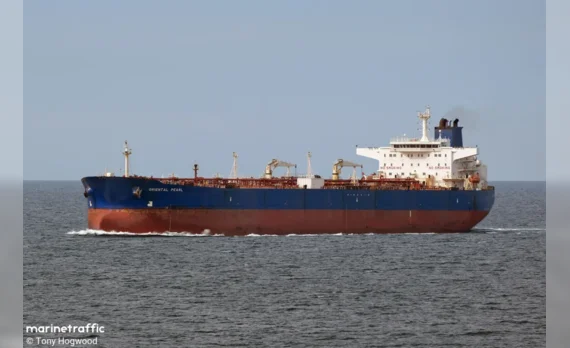
On February 21, 2026, Ukraine imposed sanctions on the master of the vessel.
View profile
JAGGER
Vessel name
JAGGER
IMO
9354301
Flag (Current)
russian federation russian federation
Vessel Type
Crude Oil Tanker
Category
Transportation of fossil fuels in violation of sanctions and other restrictions
icon arrow-tree Transporting russian crude oil / petroleum products
During the period of the G7 and EU oil embargo and the price-cap policy on russian crude oil, the tanker is involved in the export of russian oil to third countries from russian ports, including with the AIS signal turned off.
The tanker is certified by the Indian regulator Indian Register of Shipping (IACS).
The vessel through related companies, in particular sanctioned Oil Tankers SCF MGMT FZCO, Sun Ship Management, SCF Management Services LTD, is affiliated with the sanctioned PJSC Sovcomflot, the largest state-owned shipping company in russia, a key company for servicing and supporting offshore hydrocarbon production, transportation of russian oil, oil products, and liquefied natural gas amid sanctions restrictions on russia after its full-scale invasion of Ukraine. The services provided by Sovcomflot are a significant source of income for russia, as more than 70% of russia's revenues come from energy sales, which allows it to finance its war against Ukraine. The main charterers of Sovcomflot vessels are the largest oil and gas companies and traders in russia. Sovcomflot is involved in servicing major oil and gas projects in russia: 'Sakhalin-1', 'Sakhalin-2', 'Varandey', 'Prirazlomnoye', 'Novy Port', 'Yamal LNG' and others. Prior to russia's full-scale invasion of Ukraine, the company's fleet consisted of about 145 vessels. After the sanctions were imposed, Sovcomflot transferred dozens of vessels to the ownership of companies it had set up, including in foreign jurisdictions, in order to circumvent them, and began the practice of constantly "juggling" (transferring) vessels to related companies.
From December 17, 2024, the EU imposed sanctions on the vessel (sanctions were amended on July 18, 2025).
On December 23, 2024, Switzerland imposed sanctions on the vessel.
On January 10, 2025, USA imposed sanctions on the vessel.
In June 2025, Canada imposed sanctions on the vessel.
According to GISIS IMO data, as of July 16, 2025, the vessel's registered name is JAGUAR, the flag of Barbados. At the same time, the vessel sails under the name JAGGER, the flag of the Comoros.
On July 21, 2025, the United Kingdom imposed sanctions on the vessel.
Since December 13, 2025, Ukraine has imposed sanctions on the vessel.
View profile
JALDHARA
Vessel name
JALDHARA
IMO
9304825
Flag (Current)
Sierra Leone Sierra Leone
Vessel Type
Crude Oil Tanker
Category
Transportation of fossil fuels in violation of sanctions and other restrictions
icon arrow-tree Transporting russian crude oil / petroleum products
During the period of the G7 and EU oil embargo and the price-cap policy on russian oil, the tanker is involved in the export of russian crude oil to third countries from russian ports, including with the AIS system turned off.
The international NGO Greenpeace refers to the tanker as part of the shadow fleet of tankers that transport russian oil around the world and threaten the environment.
Since March 01, 2024, the owner and commercial manager of the tanker is an unknown company Campana Shipping Inc (Mauritius).
The tanker is affiliated with the Indian company Gatik Ship Management, one of the leading operators of the so-called 'shadow fleet', which has become the largest carrier of russian oil under sanctions since the beginning of the full-scale war between russia and Ukraine.
Tankers operated/managed by India's Gatik Ship Management continue to be used by related companies and call at russian ports.
On February 24, 2025, the United Kingdom imposed sanctions on the vessel.
In June 2025, Canada imposed sanctions on the vessel.
In June 2025, Australia imposed sanctions on the vessel.
From July 20, 2025, the EU imposed sanctions on a tanker for transporting crude oil/petroleum products that originate in russia or are exported from russia using irregular and high-risk shipping practices as set out in the International Maritime Organization General Assembly resolution A.1192 (33).
On August 12, 2025, Switzerland imposed sanctions on the vessel.
Since October 30, 2025, New Zealand has imposed sanctions on the tanker.
Since December 13, 2025, Ukraine has imposed sanctions on the vessel.
On February 21, 2026, Ukraine imposed sanctions on the master of the vessel.
View profile
VOYAGER
Vessel name
VOYAGER
IMO
9843560
Flag (Current)
Oman Oman
Vessel Type
Crude Oil Tanker
Category
Transportation of fossil fuels in violation of sanctions and other restrictions
icon arrow-tree Transporting russian crude oil / petroleum products
During the period of the G7+oil embargo and the price-cap policy on russian crude oil/oil products, the tanker is involved in the export of russian crude oil/oil products to third countries from russian ports, including with the AIS signal turned off.
The vessel through related companies, in particular sanctioned Stream Ship Management FZCO, Oil Tankers SCF MGMT FZCO, Sun Ship Management, SCF Management Services LTD, is affiliated with the sanctioned PJSC Sovcomflot, the largest state-owned shipping company in russia for servicing and supporting offshore hydrocarbon production, transportation of russian crude oil, oil products, liquefied natural gas. The main charterers of Sovcomflot vessels are the largest oil and gas companies and traders in russia. Sovcomflot is involved in servicing major oil and gas projects in russia: 'Sakhalin-1', 'Sakhalin-2', 'Varandey', 'Prirazlomnoye', 'Novy Port', 'Yamal LNG' and others.
As sanctions are being imposed, russia uses a scheme of 'juggling' ships between related companies to conceal oil exports outside price-cap and other restrictions, as well as to hide the real owners of ships, and to ensure unimpeded transportation of fossil fuels by a 'shadow' fleet of obsolete oil tankers, creates new companies for these purposes (in the UAE, Hong Kong, India, Turkey, Mauritius, Seychelles, and other jurisdictions) with non-transparent organizational and ownership structures. In order to implement this scheme, technical/commercial management and ship owners are constantly changing, and vessels are renamed with a change of flag, MMSI, call-sign, including for sanctioned vessels. Shadow fleet vessels operate under 'convenient flags', which allows them to conceal their true origin and avoid control by international organizations and insurance companies.
On January 10, 2025, USA imposed sanctions on the vessel.
On February 24, March 04, 2025 EU and Switzerland respectively imposed sanctions on the tanker for transporting crude oil/oil products originating in or exported from russia using irregular and high-risk shipping practices as specified in the International Maritime Organization General Assembly resolution A.1192 (33) (EU sanctions will enter into force on February 25, 2025).
In June 2025, Canada imposed sanctions on the vessel.
On July 21, 2025, the United Kingdom imposed sanctions on the vessel.
Since December 13, 2025, Ukraine has imposed sanctions on the vessel.
View profile
MAINI
Vessel name
MAINI
IMO
9319870
Flag (Current)
Cameroon Cameroon
Vessel Type
Crude Oil Tanker
Category
Transportation of fossil fuels in violation of sanctions and other restrictions
icon arrow-tree Transporting russian crude oil / petroleum products
During the period of the G7 and EU oil embargo and the price-cap policy on russian crude oil, the tanker is involved in the export of russian crude oil to third countries from russian ports, including with the AIS system disabled.
The international NGO Greenpeace refers to the tanker as part of the shadow fleet of tankers that transport russian oil around the world and threaten the environment.
The tanker is affiliated with the Indian company Galena Ship Management, which is one of a number of other companies involved in the practice of 'juggling' vessels associated with the Indian Gatik Ship Management, one of the leading operators of the so-called 'shadow fleet', which has become the largest carrier of russian oil under sanctions since the beginning of russia's full-scale war against Ukraine.
Tankers operated/managed by India's Gatik Ship Management continue to be used by related companies and call at russian ports.
As sanctions are being imposed, russia uses a scheme of "juggling" ships between related companies to conceal oil exports outside the price cap and other restrictions, as well as to hide the real owners of ships, and to ensure unimpeded transportation of fossil fuels by a 'shadow' fleet of obsolete oil tankers, creates new companies for these purposes (in the UAE, Hong Kong, India, Turkey, Mauritius, Seychelles, and other jurisdictions) with non-transparent organizational and ownership structures. In order to implement this scheme, technical/commercial management and ship owners are constantly changing, and vessels are renamed with a change of flag, MMSI, call-sign, including for sanctioned vessels. Shadow fleet vessels operate under "convenient flags", which allows them to conceal their true origin and avoid control by international organizations and insurance companies.
The shadow fleet of the russian federation continues to provide multibillion-dollar revenues for the kremlin bypassing sanctions, disguising its activities under the flags of third countries, using complex schemes to conceal owners, and poses significant threats to environmental safety with significant economic costs for coastal countries and/or the international community due to the outdated and inadequate insurance of shadow fleet tankers.
On May 09, 2025, the United Kingdom imposed sanctions on the tanker as part of the restrictions on the shadow fleet of the russian federation, including for engaging in activities aimed at destabilizing Ukraine, undermining/threatening the territorial integrity, sovereignty or independence of Ukraine or benefiting from or supporting the government of russia, and participating in the transportation of crude oil/petroleum products of russian origin, in particular, from russia to a third country.
On May 20, 2025, the EU imposed sanctions, which enter into force on May 21, 2025, on the tanker for the transportation of crude oil/petroleum products originating in or exported from russia, using irregular high-risk shipping practices as specified in the International Maritime Organization General Assembly Resolution A.1192(33).
On June 03, 2025, the sanctions imposed by Switzerland on the vessel came into force.
In June 2025, Canada imposed sanctions on the vessel.
Since September 18, 2025, Australia has imposed sanctions on the vessel.
Since December 13, 2025, Ukraine has imposed sanctions on the vessel.
On February 21, 2026, Ukraine imposed sanctions on the master of the vessel.
View profile
KOMANDER
Vessel name
KOMANDER
IMO
9271585
Flag (Current)
russian federation russian federation
Vessel Type
Crude Oil Tanker
Category
Transportation of fossil fuels in violation of sanctions and other restrictions
icon arrow-tree Transporting russian crude oil / petroleum products
During the period of the G7 and EU oil embargo and the price-cap policy on russian crude oil, the tanker is involved in the export of russian crude oil to third countries from russian ports, including with the AIS system disabled.
The international NGO Greenpeace refers to the tanker as part of the shadow fleet of tankers that transport russian oil around the world and threaten the environment.
The owner and commercial manager of the tanker since October 01, 2024 is an unknown company YO SHUI MARINE LIMITED, established on September 19, 2024 in Hong Kong. The ISM-manager of the tanker is the Indian company AMSHA MARITIME, which manages another tanker 'LACONIA' (IMO 9257022), affiliated with the Indian company Gatik Ship Management.
The tanker 'KRISHNA 1' is also affiliated with the Indian company Gatik Ship Management, one of the leading operators of the so-called 'shadow fleet', which has become the largest carrier of russian oil under sanctions since the beginning of the full-scale war against Ukraine.
Tankers operated/managed by India's Gatik Ship Management continue to be used by related companies and call at russian ports.
As sanctions are being imposed, russia uses a scheme of "juggling" ships between related companies to conceal oil exports outside the price cap and other restrictions, as well as to hide the real owners of ships, and to ensure unimpeded transportation of fossil fuels by a 'shadow' fleet of obsolete oil tankers, creates new companies for these purposes (in the UAE, Hong Kong, India, Turkey, Mauritius, Seychelles, and other jurisdictions) with non-transparent organizational and ownership structures. In order to implement this scheme, technical/commercial management and ship owners are constantly changing, and vessels are renamed with a change of flag, MMSI, call-sign, including for sanctioned vessels. Shadow fleet vessels operate under "convenient flags", which allows them to conceal their true origin and avoid control by international organizations and insurance companies.
Almost all vessels that are involved in the transportation of russian oil by the shadow fleet since 2022 have been certified by the Indian regulator Indian Register of Shipping (IACS). The certification of shadow fleet vessels allows the shipowner/operator to insure the vessels, which, in turn, allows the vessels to enter ports and pass through various specific sea routes (straits, canals, etc.).
The 'shadow' fleet, transporting huge volumes of crude oil through heavily trafficked routes through narrow straits close to the coastline, without proper P&I insurance, with automatic identification systems disabled, threatens an environmental disaster with significant economic costs to be borne by the affected coastal countries and/or the international community. The recent incidents off Malaysia only underscore the need for swift action to curb the potentially devastating impact of the growing 'shadow fleet'. 'Shadow' tankers have already been involved in 50 incidents from the Danish Straits all the way to Malaysia since russia's full-scale invasion of Ukraine.
According to CREA, from January to August 2024, the number of shadow tankers crossing the Danish Straits in Europe increased by 277% compared to the same period in 2022, with 64% of the 46 million tons of russian marine oil transported through the Danish Straits being transported by shadow tankers. In the same period, the number of shadow tankers in the Straits of Dover and Gibraltar increased by 355% compared to 2022, transporting 67% of the 37 million tons of oil through the straits. The Suez Canal experienced a staggering 649% increase in shadow tanker traffic, with 69% of the 52 million tons of russian crude oil passing through it being transported by these vessels.
Thus, the 'shadow fleet' of the russian federation continues to provide multibillion-dollar revenues for the kremlin bypassing sanctions, disguising its activities under the flags of third countries, using complex schemes to conceal owners, and poses significant threats to environmental safety with significant economic costs for coastal countries and/or the international community due to the outdated and inadequate insurance of shadow fleet tankers.
On December 16, 2024, the EU imposed sanctions on the tanker (effective from December 17, 2024) due to the transportation of crude oil or petroleum products originating in or exported from russia, using irregular high-risk shipping practices as set out in the International Maritime Organization General Assembly Resolution A.1192(33); in relation to contributing to, supporting actions or policies aimed at the exploitation, development or expansion of the energy sector in russia, including energy infrastructure.
On December 23, 2024, Switzerland imposed sanctions on the vessel due to the transportation of crude oil or petroleum products originating in or exported from russia, using irregular high-risk shipping practices as set out in the International Maritime Organization General Assembly Resolution A.1192(33); in relation to contributing to, supporting actions or policies aimed at the exploitation, development or expansion of the energy sector in russia, including energy infrastructure.
On January 10, 2025, USA imposed sanctions on the vessel.
In June 2025, Canada imposed sanctions on the vessel.
On July 21, 2025, the United Kingdom imposed sanctions on the vessel.
Since December 13, 2025, Ukraine has imposed sanctions on the vessel.
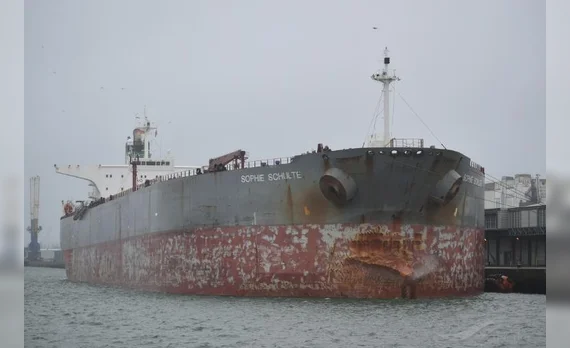
On February 21, 2026, Ukraine imposed sanctions on the master of the vessel.
View profile
KARTHA
Vessel name
KARTHA
IMO
9317949
Flag (Current)
Sierra Leone Sierra Leone
Vessel Type
Crude Oil Tanker
Category
Transportation of fossil fuels in violation of sanctions and other restrictions
icon arrow-tree Transporting russian crude oil / petroleum products
During the G7 and EU oil embargo and price cap policy on russian crude oil, the tanker is involved in transporting russian crude oil from russian ports in the Baltic, Black Sea, and Pacific regions to third countries, in some cases with disabled AIS.
In 2024 and 2025, the tanker transported russian crude oil sold by PJSC Surgutneftegaz and PJSC NK Rosneft to India.
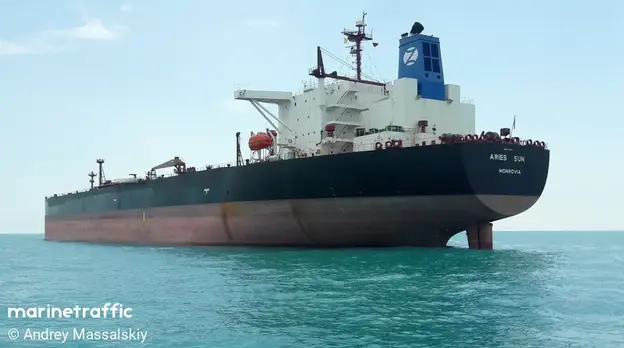
The tanker is affiliated with the Indian company Gatik Ship Management, one of the leading operators of the so-called 'shadow' fleet involved in the transportation of russian crude oil under Western sanctions, and Gatik's related companies, including Plutos Ship Management, Ark Seakonnect Shipmanagment LLC. Gatik Ship Management, Plutos Ship Management, Ark Seakonnect Shipmanagment LLC were the previous managers of the tanker. Since the beginning of russia's full-scale war against Ukraine, the Indian company Gatik Ship Management has become the largest carrier of russian oil and was used to operate the russian 'shadow' fleet under sanctions. The constant change of ship owners and managers to avoid sanctions and conceal the true beneficiaries of the ships is typical for the so-called 'shadow' fleet involved in the russian oil and oil products trade.
On October 17, 2024, the United Kingdom imposed sanctions on the tanker IMO 9317949 for its involvement in the transport of russian crude oil and/or petroleum products from the russian federation to third countries.
On February 21, 2025, Canada imposed sanctions on the vessel.
Since February 25 and March 4, 2025, the EU and Switzerland have imposed sanctions on the tanker for transporting crude oil/petroleum products originating in or exported from russia, using irregular shipping practices with a high degree of risk, as specified in Resolution A.1192 (33) of the General Assembly of the International Maritime Organization.
On June 19, 2025, New Zealand imposed sanctions on the vessel.
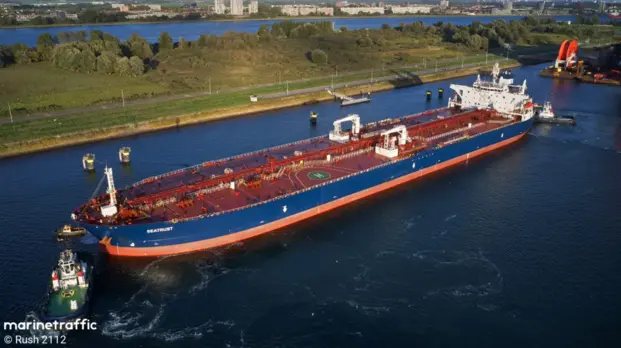
On December 4, 2025, Australia imposed sanctions on the tanker.
On December 13, 2025, Ukraine imposed sanctions on the vessel.
View profile
To top