Marine Vessels

involved in the transportation of weapons, stolen
Ukrainian products and in the circumvention of sanctions
Total number:
1488
Marine vessels
545
Masters
Updated: 10.10.2026
Maritime logistics is critically important for building up the aggressor`s military capabilities, moving troops, obtaining weapons and sanctioned goods, and trading stolen goods. Aggressors transport weapons through international straits on civilian merchant vessels. Exporting fossil fuels to circumvent sanctions is the main source of income for russia and Iran. The shadow tanker fleet and ships without ice class in the Arctic threaten an environmental disaster. Through the sale of agricultural products from the temporarily occupied Ukrainian territories, russia finances the war and maintains the loyalty of its allies, Iran and the DPRK.
Together we can stop this to restore peace and security
Actions to be taken
  • to sanction the vessels on the list below, as well as all related companies and individuals (owners, operators, managers, executives, senior crew members)
  • to prohibit the entry of such vessels into ports, territorial waters, EEZs and international straits, and the sale of spare parts for them
 
  • to increase and ensure compliance with environmental and safety requirements for tankers entering territorial waters, EEZs and international straits
  • to require bank statements to confirm compliance with the price-cap when receiving insurance and other services
View


Total: 1
PORT OLYA-3
Vessel name
PORT OLYA-3
IMO
9481910
Flag (Current)
russian federation russian federation
Vessel Type
General cargo ship
Category
Transportation of military cargo
icon arrow-tree Weapons and military equipment
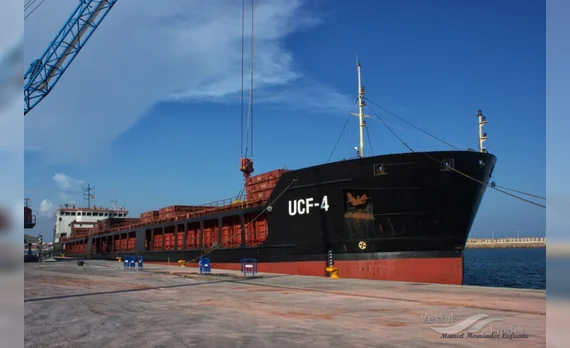
In 2023-2024, the vessel was used to transport weapons (military equipment and ammunition) to russia.
The vessel is involved in the delivery of ballistic missiles from Iran to russia (Olya port, Astrakhan region) in August-September 2024.
At the end of 2023, Iran and russia agreed to transfer weapons systems from Iran to russia. It is known that among the systems that Iran agreed to provide to russia are Fath-360 short-range ballistic missiles (CRBM).
In early July 2024, about 40 russian servicemen allegedly traveled to Iran to train on Fath-360 CRBM missiles.
In August 2024, 25 20-foot-long containers were loaded with ballistic missiles at a missile facility in Iran. Each 20-foot-long container can hold up to nine CRBMs.
In mid-August 2024, these 25 containers were transported to the port of Amirabad on the Caspian Sea in Iran and then loaded onto the "Port Olya-3" vessel by August 30.
Subsequently, by September 04, 2024, these 25 containers were unloaded from the vessel "Port Olya-3" and loaded onto railroad cars in the port of Olya (russia).
The vessel is owned by a russian sanctioned company, MG-Flot LLC, associated with Astrakhan businessman Jamaldin Emirmagomedovich Pashayev, who built his business around the Olya trade port in Astrakhan region. This particular location was proposed as a key logistics hub for the North-South international transport corridor, the creation and construction of which was overseen and controlled by former russian Prime Minister Mikhail Fradkov. The key purpose of the transport corridor was to trade with sanctioned Iran, which could import and export goods via the North-South route.
On 10 September 2024, USA imposed sanctions on the vessel.
On October 18, 2024, United Kingdom imposed sanctions on a ship in connection with the transportation of military cargo from a third country (Iran) to a certain location in russia.
On February 21, 2025, Canada imposed sanctions on the vessel.
On May 23, 2026, Ukraine imposed sanctions on the vessel.
Since July 24, 2026, the EU has imposed sanctions on the vessel.
View profile
To top