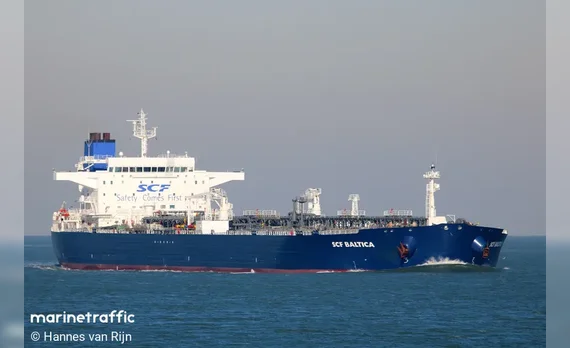
The vessel is involved in the transportation of russian crude oil during the period of the G7 and EU oil embargo and price-cap policy on russian oil to third countries (in particular, India) from the russian port of Ust-Luga in the Baltic Sea.
The tanker is certified by the Indian regulator Indian Register of Shipping (IACS).
The vessel, through its related companies, including Stream Ship Management FZCO, is affiliated with the sanctioned PJSC Sovcomflot, the largest state-owned shipping company in russia for servicing and supporting offshore hydrocarbon production, transportation of russian oil, oil products and liquefied natural gas. The main charterers of Sovcomflot's vessels are russia's largest oil and gas companies and traders. Sovcomflot is involved in servicing major oil and gas projects in russia: Sakhalin 1, Sakhalin 2, Varandey, Prirazlomnoye, Novy Port, Yamal LNG and others. Prior to russia's full-scale invasion of Ukraine, the company's fleet consisted of about 145 vessels. After the imposition of sanctions, Sovcomflot transferred dozens of vessels to the ownership of companies it had set up, including in foreign jurisdictions, in order to circumvent them, and began the practice of constantly ‘juggling’ (transferring) vessels to related companies. The tankers ‘re-registered’ by Sovcomflot to related companies, according to expert estimates, are part of the so-called ‘shadow tanker fleet’ of the russian federation to continue selling russian oil, oil products and liquefied gas under western sanctions.
On 11 September 2024, the United Kingdom imposed sanctions on 10 oil tankers (including ІМО 9305568) related to the transportation of oil or oil products from russia to third countries.
On February 21, 2025, Canada imposed sanctions on the vessel.
Since October 24, 2025, the EU has imposed sanctions on the vessel.
On December 4, 2025, Australia imposed sanctions on the tanker.
Since December 13, 2025, Switzerland has imposed sanctions on the vessel.
Since December 13, 2025, Ukraine has imposed sanctions on the vessel.
On February 20, 2026, New Zealand imposed sanctions on the vessel.
The tanker has been flying the russian flag since August 2026.