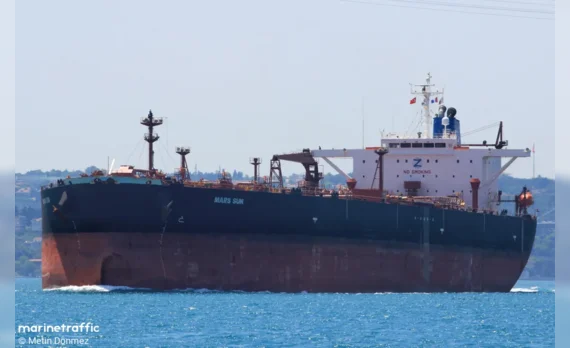
Since 2023, the 2006-built tanker with a deadweight of 115,536 tons has been involved in the export of russian crude oil from the russian ports of Ust-Luga and Primorsk in the Baltic Sea, mainly to India, as well as in the transshipment of russian oil by STS in the Red Sea. Until 2023, the tanker was not involved in the transportation of russian oil.
The international NGO Greenpeace refers to the tanker as part of a shadow fleet of tankers that transport russian crude around the world and threaten the environment.
The ISM management of the vessel in 2023-2024 was carried out by the Indian company Margao Marine Solutions OPC. The said company carried out ISM management of another sanctioned shadow fleet tanker IMO 9402471, which was involved in a collision near Denmark when the tanker was sailing to load russian flagship Urals crude oil on March 04, 2024 in the Baltic port of Primorsk. This incident is an indication of the risks associated with the activities of the outdated shadow tanker fleet at sea.
Today, russia continues to make efforts to avoid/ circumvent sanctions, expand its shadow fleet with a growing number of outdated, poorly maintained vessels, use a 'ghost armada', many of which have experience in working under sanctions imposed on regimes such as Iran and Venezuela, use 'convenient' flags for vessel registration, complex ownership and management structures, and employ various tactics to conceal the origin of their cargo, including ship-to-shore transshipment (STS), disabling automatic identification systems (AIS), falsifying positions, transmitting false data, and other deceptive or even illegal methods. russia's shadow fleet, operating with minimal compliance with the rules and transporting huge volumes of crude oil through heavily trafficked routes through narrow straits close to the coastline, without proper P&I insurance, with the automatic identification system disabled, threatens an environmental disaster with significant economic costs to be borne by the affected coastal countries and/or the international community.
On December 17, 2024, the United Kingdom imposed sanctions on a vessel in connection with the transportation of crude oil or oil products originating in russia or from russia to a third country.
On February 21, 2025, Canada imposed sanctions on the vessel.
Since February 25, March 04, 2025 EU and Switzerland have respectively imposed sanctions on the tanker for transporting crude oil/oil products originating in or exported from russia using irregular and high-risk shipping practices as specified in the International Maritime Organization General Assembly resolution A.1192 (33); promoting or supporting actions/policies aimed at the exploitation, development or expansion of the energy sector in russia, including energy infrastructure (EU sanctions will enter into force on February 25, 2025).
In June 2025, Australia imposed sanctions on the vessel.
On June 19, 2025, New Zealand imposed sanctions on the vessel.
Since December 13, 2025, Ukraine has imposed sanctions on the vessel.
On February 21, 2026, Ukraine imposed sanctions on the master of the vessel.
The tanker has been flying the russian flag since July 2026.