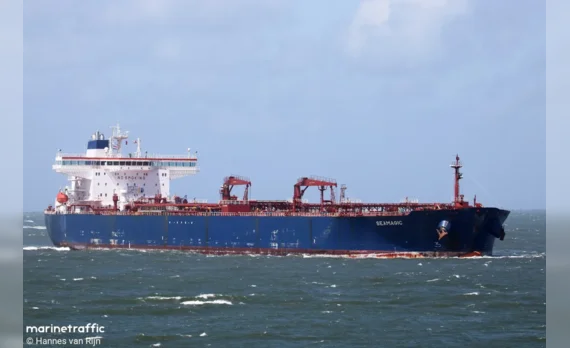
During the G7 and EU oil embargo and price cap policy on russian crude oil, the tanker is involved in transporting russian crude oil from russian ports in the Baltic, Black Sea, and Pacific regions to third countries, in some cases with disabled AIS.
In 2024 and 2025, the tanker transported russian crude oil sold by PJSC Surgutneftegaz and PJSC NK Rosneft to India.
The tanker is affiliated with the Indian company Gatik Ship Management, one of the leading operators of the so-called 'shadow' fleet involved in the transportation of russian crude oil under Western sanctions, and Gatik's related companies, including Plutos Ship Management, Ark Seakonnect Shipmanagment LLC. Gatik Ship Management, Plutos Ship Management, Ark Seakonnect Shipmanagment LLC were the previous managers of the tanker. Since the beginning of russia's full-scale war against Ukraine, the Indian company Gatik Ship Management has become the largest carrier of russian oil and was used to operate the russian 'shadow' fleet under sanctions. The constant change of ship owners and managers to avoid sanctions and conceal the true beneficiaries of the ships is typical for the so-called 'shadow' fleet involved in the russian oil and oil products trade.
On October 17, 2024, the United Kingdom imposed sanctions on the tanker IMO 9317949 for its involvement in the transport of russian crude oil and/or petroleum products from the russian federation to third countries.
On February 21, 2025, Canada imposed sanctions on the vessel.
Since February 25 and March 4, 2025, the EU and Switzerland have imposed sanctions on the tanker for transporting crude oil/petroleum products originating in or exported from russia, using irregular shipping practices with a high degree of risk, as specified in Resolution A.1192 (33) of the General Assembly of the International Maritime Organization.
On June 19, 2025, New Zealand imposed sanctions on the vessel.
On December 4, 2025, Australia imposed sanctions on the tanker.
On December 13, 2025, Ukraine imposed sanctions on the vessel.
The tanker has been flying the russian flag since July 2026.