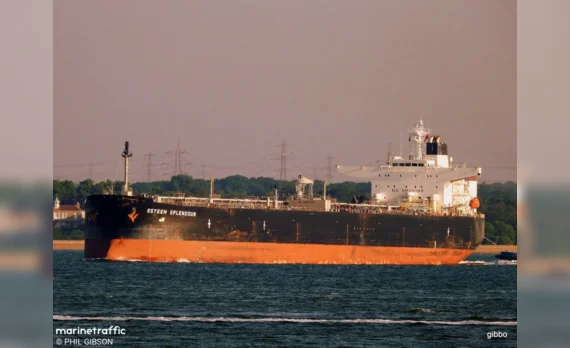
Since November 2023, the tanker has been involved in the export of russian crude oil mainly to China, India, including the EU, in violation of the G7 and EU oil embargo on russian oil. In particular, in May 2024, the vessel was transporting russian crude oil from the port of Primorsk in the Baltic Sea to the place of oil transfer near the port of Nador (Morocco) and the Spanish port of Melilla.
According to the USA-based human rights group United Against Nuclear Iran (UANI), which monitors Iran-related tanker traffic using satellite data, the vessel was involved in the transportation of Iranian oil and switched to transporting russian oil on August 31, 2023. Since the beginning of russia's full-scale invasion of Ukraine in February 2022, more than 90 vessels that previously helped Tehran export Iranian export oil are now helping russia transport russian oil/oil products. In May 2022, UANI first predicted that russia would turn to a 'ghost armada' to ensure oil flows to its Chinese partner.
The international public organization Greenpeace refers to the tanker as a shadowy fleet of tankers transporting russian oil around the world and threatening the environment.
Oil exports from russia are the most important source of income for the regime of the aggressor country to finance the war against Ukraine. From February 2022 to November 22, 2024, russia earned almost 546 billion euros in oil export revenues (69% of all fossil fuel export revenues). In 2023, about a third of all tax revenues in russia came from the sale of oil and gas. The tax on oil production collected by the russian federation in 2023 amounted to 8.9 trillion rubles, or 31% of total federal revenues. According to the CREA data for October 2024, russia's revenues from crude oil exported by sea amounted to 210 million euros per day, 83% of the total volume of russian marine crude oil was transported by shadow tankers, while tankers owned or insured in countries that impose price restrictions accounted for 17% of the total value of russian oil exported in October.
Shadow fleet of russia continues to generate multibillion-dollar revenues for the kremlin bypassing sanctions, disguising its activities under the flags of third countries, using complex schemes to conceal owners, and poses significant environmental threats with significant economic costs to coastal countries and/or the international community due to the outdated and inadequate insurance of shadow fleet tankers.
On May 20, 2025, the United Kingdom imposed sanctions on the tanker as part of the restrictions on the shadow fleet of the russian federation, including for engaging in activities aimed at destabilizing Ukraine, undermining/threatening the territorial integrity, sovereignty or independence of Ukraine or benefiting from or supporting the government of russia, and participating in the transportation of crude oil/petroleum products of russian origin, in particular, from russia to a third country.
On June 03, 2025, the sanctions imposed by Switzerland on the vessel came into force.
Since December 13, 2025, Ukraine has imposed sanctions on the vessel.
On February 21, 2026, Ukraine imposed sanctions on the master of the vessel.
On February 19, 2026, Canada imposed sanctions on the vessel.
On February 24, 2026, Australia imposed sanctions on the vessel.