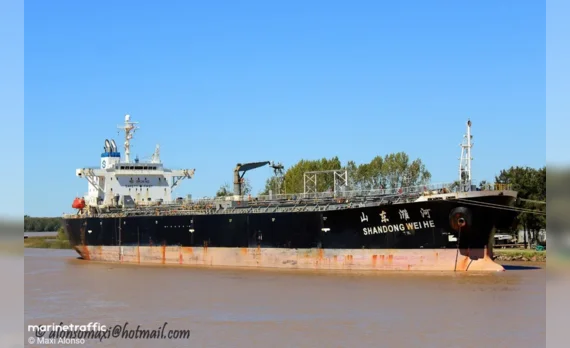
During the period of the G7 and EU oil embargo and the price cap policy on russian crude oil/petroleum products, the tanker has been used since January 2024 to export russian petroleum products from the ports of St. Petersburg, Ust-Luga, Primorsk, Novorossiysk, and Tuapse to Turkey, Senegal, Togo, India, and Tunisia.
In December 2023, Blossom Bridge Corp (IMO 6437580), registered in the Seychelles at Suite 10, 3rd Floor, La Ciotat, Mont Fleuri, Mahe Island Seychelles, which is widely used for registration of shipping companies with non-transparent ownership structure, became the owner and commercial manager of the tanker, and the Moldovan company Surt Ship Management SRL became the technical manager. This Moldovan company is one of the ten Moldovan companies that played a significant role in the maritime transportation of russian crude oil and petroleum products in 2024. In September 2024, the technical management was transferred to Seafaring Savants LLC (Azerbaijan), while the owner and commercial manager of the tanker did not change, which may indicate that the beneficiary of the vessel has not changed. Since August 2025, technical management has been carried out by Nebulon Steelviel LLC (Azerbaijan), while Blossom Bridge Corp. remains the owner and commercial manager of the tanker.
After the change of management, the tanker continues to make calls to russian ports with oil terminals.
On May 9, 2025, the United Kingdom imposed sanctions on a tanker as part of restrictions targeting the russian federation’s shadow fleet.
Since May 21, 2025, the EU has imposed sanctions on the tanker for transporting crude oil or petroleum products originating in or exported from russia , using irregular and high-risk shipping practices, as specified in International Maritime Organization General Assembly Resolution A.1192(33).
Since June 3, 2025, Switzerland has imposed sanctions on the vessel.
In June 2025, Canada imposed sanctions on the vessel.
In August 2025, Ukraine imposed sanctions on the tanker’s captain.
As of September 18, 2025, Australia imposed sanctions on the vessel.
As of December 13, 2025, Ukraine imposed sanctions on the vessel.
The tanker is also involved in supplying petroleum products to russia during the fuel crisis. In late August 2026, the tanker IMO 9284726 delivered nearly 30,000 metric tons of fuel from Egypt (the Port Said area) to the port of Vysotsk, the oil terminal owned by the sanctioned company PJSC Lukoil.