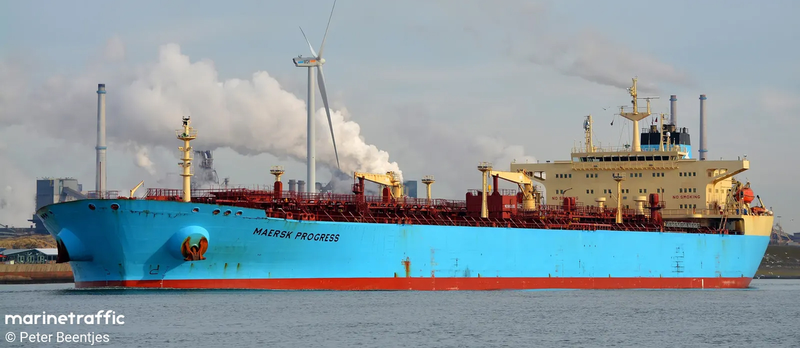
The 2005-built tanker with a deadweight of 109,000 tons has been involved in the transportation of russian crude oil from the russian ports of Ust-Luga and Primorsk in the Baltic Sea since May 2022, and from the russian port of Tuapse in the Black Sea to China and India since 2024. Until 2022, the tanker was not involved in the transportation of russian oil. The vessel is certified by the China Classification Society (IACS).
Oil exports are ussia's largest source of revenue. From February 2022 to June 2024, russia earned 475 billion euros in oil export revenues (68% of all fossil fuel export revenues). In 2023, about a third of all tax revenues in russia came from the sale of oil and gas. The tax on oil production collected by the russian federation in 2023 amounted to 8.9 trillion rubles, or 31% of total federal revenues. According to CREA data for September 2024, russia's revenues from crude oil exported by sea amounted to 192 million euros per day, 86% of the total volume of russian marine crude oil was transported by 'shadow' tankers, while tankers owned or insured in countries implementing price restrictions accounted for 14% of the total value of russian oil exported in September.
Today, russia continues to make efforts to avoid/ circumvent sanctions, expand its shadow fleet with a growing number of outdated, poorly maintained vessels, use a 'ghost armada', many of which have experience in working under sanctions imposed on regimes such as Iran and Venezuela, use 'convenient' flags for vessel registration, complex ownership and management structures, and employ various tactics to conceal the origin of their cargo, including ship-to-shore transshipment (STS), disabling automatic identification systems (AIS), falsifying positions, transmitting false data, and other deceptive or even illegal methods. russia's shadow fleet, operating with minimal compliance with the rules and transporting huge volumes of crude oil through heavily trafficked routes through narrow straits close to the coastline, without proper P&I insurance, with the automatic identification system disabled, threatens an environmental disaster with significant economic costs to be borne by the affected coastal countries and/or the international community.
On May 09, 2025, the United Kingdom imposed sanctions on the tanker as part of the restrictions on the shadow fleet of the russian federation, including for engaging in activities aimed at destabilizing Ukraine, undermining/threatening the territorial integrity, sovereignty or independence of Ukraine or benefiting from or supporting the government of russia, and participating in the transportation of crude oil/petroleum products of russian origin, in particular, from russia to a third country.
On May 20, 2025, the EU imposed sanctions, which will enter into force on May 21, 2025, on the tanker for the transportation of crude oil/petroleum products originating in or exported from russia, using irregular high-risk shipping practices as specified in the International Maritime Organization General Assembly Resolution A.1192(33).
On June 03, 2025, the sanctions imposed by Switzerland on the vessel came into force.
In June 2025, Canada imposed sanctions on the vessel.
Since September 18, 2025, Australia has imposed sanctions on the vessel.
Since October 30, 2025, New Zealand has imposed sanctions on the tanker.
Since December 13, 2025, Ukraine has imposed sanctions on the vessel.