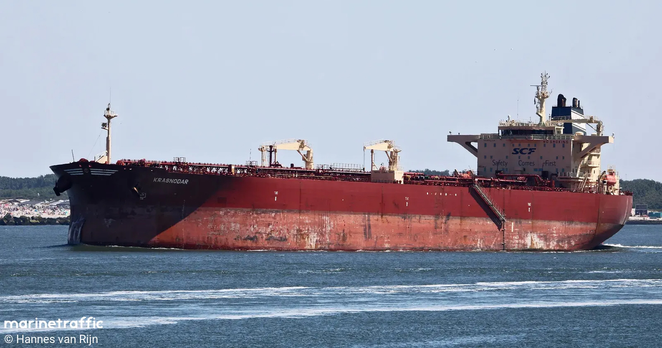
During the G7 and EU oil embargo and price cap policy on russian crude oil, the tanker is involved in the export of russian crude oil from russian ports in the Baltic Sea, Black Sea, and Pacific region, mainly to India and China.
The tanker also transports Iranian crude oil.
Many tankers involved in transporting Iranian oil to countries such as China are also involved in Venezuelan trade, including tanker IMO 9270517. On June 11, 2022, Venezuelan leader Nicolás Maduro and former Iranian President Ebrahim Raisi signed a 20-year cooperation agreement to expand ties in the oil and petrochemical industries, as well as in the military and economic spheres. Since then, bilateral ties have begun to develop. Most cargo is transported by ships belonging to the sanctioned National Iranian Tanker Company (NITC) in both directions. A significant number of ships flying under foreign (non-Iranian) flags are also involved in this trade.
The international NGO Greenpeace refers to the tanker as part of a shadow fleet of tankers transporting russian oil around the world and threatening the environment.
The vessel is affiliated with Sun Ship Management, a sanctioned company associated with the sanctioned Sovcomflot, the largest state-owned shipping company in russia for servicing and supporting offshore hydrocarbon production, transportation of russian oil, oil products, and liquefied natural gas. The main charterers of Sovcomflot vessels are the largest oil and gas companies and traders in russia. Sovcomflot is involved in servicing major oil and gas projects in russia: 'Sakhalin-1', 'Sakhalin-2', 'Varandey', 'Prirazlomnoye', 'Novy Port', 'Yamal LNG' and others. Prior to russia's full-scale invasion of Ukraine, the company's fleet consisted of about 145 vessels. After the sanctions were imposed, Sovcomflot transferred dozens of vessels to the ownership of companies it had set up, including in foreign jurisdictions, in order to circumvent them, and began the practice of constantly 'juggling' (transferring) vessels to related companies.
Since May 21 and June 3, 2025, the EU and Switzerland have imposed sanctions on tankers transporting crude oil/petroleum products originating in or exported from russia, using irregular shipping practices with a high degree of risk, as specified in Resolution A.1192(33) of the General Assembly of the International Maritime Organization.
In June 2025, Canada imposed sanctions on the vessel.
On July 21, 2025, the United Kingdom imposed sanctions on the vessel.
Since December 13, 2025, Ukraine has imposed sanctions on the vessel.
On February 21, 2026, Ukraine imposed sanctions on the master of the vessel.