Marine Vessels

involved in the transportation of weapons, stolen
Ukrainian products and in the circumvention of sanctions
Total number:
1468
Marine vessels
545
Masters
Updated: 23.09.2026
Maritime logistics is critically important for building up the aggressor`s military capabilities, moving troops, obtaining weapons and sanctioned goods, and trading stolen goods. Aggressors transport weapons through international straits on civilian merchant vessels. Exporting fossil fuels to circumvent sanctions is the main source of income for russia and Iran. The shadow tanker fleet and ships without ice class in the Arctic threaten an environmental disaster. Through the sale of agricultural products from the temporarily occupied Ukrainian territories, russia finances the war and maintains the loyalty of its allies, Iran and the DPRK.
Together we can stop this to restore peace and security
Actions to be taken
  • to sanction the vessels on the list below, as well as all related companies and individuals (owners, operators, managers, executives, senior crew members)
  • to prohibit the entry of such vessels into ports, territorial waters, EEZs and international straits, and the sale of spare parts for them
 
  • to increase and ensure compliance with environmental and safety requirements for tankers entering territorial waters, EEZs and international straits
  • to require bank statements to confirm compliance with the price-cap when receiving insurance and other services
View


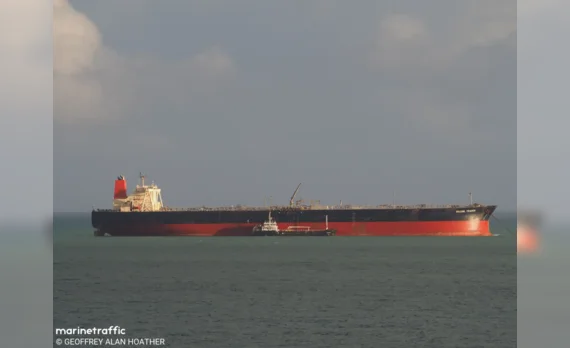
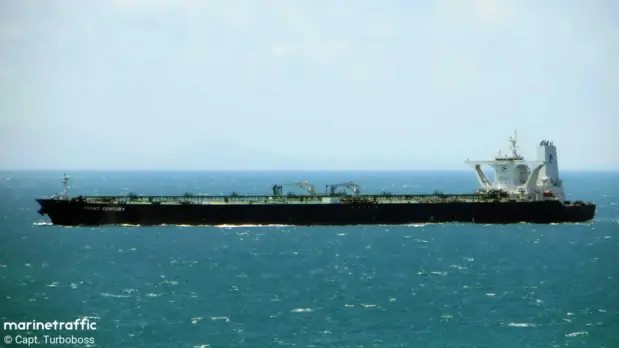
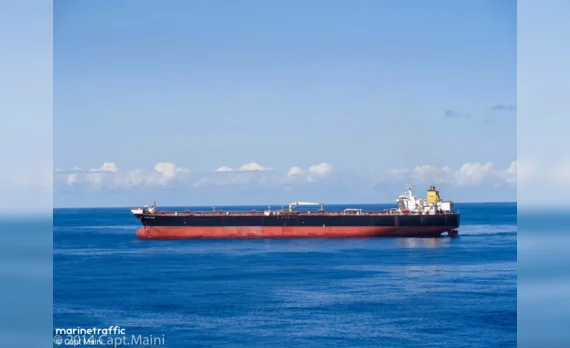
Total: 1065
BILI
Vessel name
BILI
IMO
9285756
Flag (Current)
unknown
Vessel Type
Chemical/Oil Products Tanker
Category
Transportation of fossil fuels in violation of sanctions and other restrictions
icon arrow-tree Transportation of Iranian crude oil / petroleum products
The tanker is involved in the transportation of sanctioned Iranian oil, deceptive practices with the disabling of AIS signals, and dark activities near Iran.
Iran relies on an extensive network of tankers and ship management companies in multiple jurisdictions to transport its oil to foreign customers, using deceptive tactics such as falsifying documentation, manipulating ship tracking systems, and constantly changing ship names and flags. One of the most commonly used tactics to evade oil sanctions is 'flag hopping' in various national registries, which allows the vessel to carry out transportation and have the right to moor. This tactic is often accompanied by the creation of fictitious companies, change of owners, managers, ship names, and change of physical markings of the vessel. Some shipowners deliberately use flag registries to evade sanctions, many of which do not have the resources and capabilities to track and verify the history of their vessels.
The tanker is affiliated with the Indian company Tightship Shipping Management (OPC) Private Limited, whose fleet (including the tanker ІМО 9285756) is involved in the transportation of Iranian oil worth tens of millions of dollars for the sanctioned National Iranian Oil Company (NIOC) at least since 2022. The National Iranian Oil Company (NIOC) is one of the largest oil and gas companies in the world and is controlled by the Iranian Ministry of Oil. NIOC and its subsidiaries explore, produce, transport, refine and export oil and natural gas in Iran. The oil deals of NIOC, including its subsidiaries, are used to generate revenue for the IRGC-QF (Islamic Revolutionary Guard Corps) and Hizballah.
On December 03, 2024, USA imposed sanctions on the vessel.
View profile
CERES I
Vessel name
CERES I
IMO
9229439
Flag (Current)
unknown
Vessel Type
Crude Oil Tanker
Category
Transportation of fossil fuels in violation of sanctions and other restrictions
icon arrow-tree Transportation of Iranian crude oil / petroleum products
The tanker is involved in the transportation of Venezuelan, Iranian crude oil.
In particular, in January 2024, near Singapore, the tanker transshipped nearly 300,000 metric tons of Iranian oil from ship to ship on behalf of sanctioned Jazira Das International Products Trading LLC (UAE), China Concord Petroleum Company (CCPC), and the National Iranian Oil Company (NIOC). The National Iranian Oil Company (NIOC) is one of the largest oil and gas companies in the world and is controlled by the Iranian Ministry of Oil. NIOC and its subsidiaries explore, produce, transport, refine, and export oil and natural gas in Iran. NIOC's oil deals, including those of its subsidiaries, are used to generate profits for the IRGC-QF (Islamic Revolutionary Guard Corps) and Hizballah. Jazira Das International Products Trading LLC — a UAE-registered company involved in falsifying documents to "disguise" Iranian oil from the sanctioned National Iranian Oil Company (NIOC) as Emirati oil, coordinating many NIOC oil shipments to the sanctioned China Concord Petroleum Company, and concealing NIOC's involvement in the shipments.
Many tankers involved in transporting Iranian crude oil to countries such as China are involved in Venezuelan trade, including tanker IMO 9229439. On June 11, 2022, Venezuelan leader Nicolás Maduro and former Iranian President Ebrahim Raisi signed a 20-year cooperation agreement to expand ties in the oil and petrochemical industries, as well as in the military and economic spheres. Since then, bilateral relations have begun to develop. Most of the cargo is transported by ships belonging to the sanctioned National Iranian Tanker Company (NITC) in both directions. A significant number of ships flying foreign (non-Iranian) flags are also involved in this trade.
In July 2024, the vessel IMO 9229439 collided with another oil tanker, causing an oil spill in international waters near Malaysia. During the collision, the tracking signals from IMO 9229439 did not correspond to its position, which prevented communication with the other vessel.
On December 3, 2024, the United States imposed sanctions on the vessel.
View profile
FIONA II
Vessel name
FIONA II
IMO
9262766
Flag (Current)
Panama Panama
Vessel Type
Crude Oil Tanker
Category
Transportation of fossil fuels in violation of sanctions and other restrictions
icon arrow-tree Transportation of Iranian crude oil / petroleum products
The tanker is involved in the transportation of sanctioned Iranian oil, has been involved in the transportation of illegal Iranian oil since at least 2023, and has been engaged in deceptive practices and dark activities near Iran and Malaysia. In July 2024, the FIONA II transported almost 2 million barrels of Iranian crude oil to China on behalf of the sanctioned National Iranian Oil Company (NIOC). The National Iranian Oil Company (NIOC) is one of the largest oil and gas companies in the world and is controlled by the Iranian Ministry of Oil. NIOC and its subsidiaries explore, produce, transport, process and export oil and natural gas in Iran. NIOC's oil deals, including those of its subsidiaries, are used to generate revenue for the IRGC-QF (Islamic Revolutionary Guard Corps) and Hizballah.
Iran relies on an extensive network of tankers and ship management companies in many jurisdictions to transport its oil to foreign customers, using deceptive tactics (falsification of documentation, manipulation of ship tracking systems, and constant changes of ship names and flags). One of the most commonly used tactics to evade oil sanctions is 'flag hopping' in various national registries, which allows the vessel to carry out transportation and have the right to moor. This tactic is often accompanied by the creation of fictitious companies, change of owners, managers, ship names, and change of physical markings of the vessel. Some shipowners deliberately use flag registries to evade sanctions, many of which do not have the resources and capabilities to track and verify the history of ships.
On December 03, 2024, the United States imposed sanctions on the vessel.
View profile
FT ISLAND
Vessel name
FT ISLAND
IMO
9166675
Flag (Current)
Honduras Honduras
Vessel Type
Crude Oil Tanker
Category
Transportation of fossil fuels in violation of sanctions and other restrictions
icon arrow-tree Transportation of Iranian crude oil / petroleum products
The tanker has been implicated in the transportation of sanctioned Iranian oil, in particular to China, in the use of deceptive shipping practices, and in conducting dark activities near Malaysia. The vessel transported more than 1.6 million barrels of Iranian condensate to buyers in China on behalf of the sanctioned China Concord Petroleum Company and the National Iranian Oil Company (NIOC) in April 2024. The National Iranian Oil Company (NIOC) is one of the largest oil and gas companies in the world and is controlled by the Iranian Ministry of Oil. NIOC and its subsidiaries are engaged in the exploration, production, transportation, refining, and export of oil and natural gas in Iran. NIOC’s oil deals, including those of its subsidiaries, are used to generate revenue for the Islamic Revolutionary Guard Corps – Qods Force (IRGC-QF) and Hizballah.
On February 15, 2022, United Against Nuclear Iran (UANI) identified two crude oil tankers transporting Iranian crude oil via ship-to-ship (STS) transfer, with the Automatic Identification System (AIS) turned off, in the waters east of Singapore: LATIN VENTURE (formerly known as PACIFIC BRAVO, IMO 9206035) and FT ISLAND (formerly known as CCPC VANGUARD, IMO 9166675). On February 17, 2022, the vessel reappeared east of the STS relocation site.
On December 3, 2024, the United States imposed sanctions on the vessel.
View profile
ION
Vessel name
ION
IMO
9183271
Flag (Current)
Saint Kitts and Nevis Saint Kitts and Nevis
Vessel Type
Crude Oil Tanker
Category
Transportation of fossil fuels in violation of sanctions and other restrictions
icon arrow-tree Transporting russian crude oil / petroleum products
The tanker is involved in transporting Iranian crude oil, exporting russian crude oil from russian ports in the Baltic Sea and the Pacific region to third countries, and engaging in deceptive, high-risk shipping practices (AIS manipulation/spoofing).
The international non-governmental organization Greenpeace classifies the tanker as part of a shadow fleet of tankers that transport russian oil around the world via the Baltic Sea and the Kadetsky Channel area in the Bay of Mecklenburg, posing a threat to the surrounding environment.
The tanker resorted to manipulating its AIS signal while loading crude oil from Sirri Island (Iran) in August 2021, as well as falsifying its MMSI, posing as another vessel, while unloading Iranian oil in Banyas (Syria) in September 2021. In particular, during the unloading of Iranian oil in Banyas (Syria) in September 2021, according to AIS data, the vessel was anchored west of the Cypriot STS transfer zone, while simultaneously sending AIS messages from Spain.
Since russia's full-scale invasion of Ukraine in February 2022, more than 100 vessels that previously helped Iran export oil are now helping russia transport russian crude oil and petroleum products.
Many tankers involved in transporting Iranian oil to countries such as China are also involved in Venezuelan trade, including tanker IMO 9183271. On June 11, 2022, Venezuelan leader Nicolás Maduro and former Iranian President Ebrahim Raisi signed a 20-year cooperation agreement to expand ties in the oil and petrochemical industries, as well as in the military and economic spheres. Since then, bilateral ties have begun to develop. Most cargo is transported by ships belonging to the sanctioned National Iranian Tanker Company (NITC) in both directions. A significant number of ships flying under foreign (non-Iranian) flags are also involved in this trade.
On February 12, 2026, Ukraine imposed sanctions on the vessel.
View profile
CANGJIE
Vessel name
CANGJIE
IMO
9299680
Flag (Current)
India India
Vessel Type
Crude Oil Tanker
Category
Transportation of fossil fuels in violation of sanctions and other restrictions
icon arrow-tree Transporting russian crude oil / petroleum products
During the period of the G7+ oil embargo and the price cap policy on russian crude oil/petroleum products, the tanker ss involved in the export of russian crude oil/petroleum products from russian ports in the Baltic, Black Seas, and the Pacific region, including in violation of the embargo in May 2024 from the russian port of Ust-Luga to Malta.The vessel called at a russian port where the price of oil was constantly trading above the price cap.
The tanker is also involved in the transportation of Iranian oil and petroleum products.
The tanker, through related companies, including the sanctioned Sun Ship Management, is affiliated with the sanctioned PJSC Sovcomflot, the largest state-owned shipping company in russia that services and supports offshore hydrocarbon production and the transportation of russian oil, oil products, and liquefied natural gas. The major charterers of PJSC Sovcomflot's vessels are russia's largest oil and gas companies and traders. PJSC Sovcomflot is involved in servicing major oil and gas projects in russia: Sakhalin-1, Sakhalin-2, Varandey, Prirazlomnoye, Novy Port, Yamal LNG and others.
Also, through the sanctioned companies TEODOR SHIPPING L.L.C and WANTA SHIPPING L.L.C-FZ, the tanker is linked to the shipping empire of Iranian oil magnate and major arms supplier to russia Mohammad Hossein Shamkhani, son of Ali Shamkhani , former Iranian defense minister and chief political advisor to Iran's supreme leader Ali Khamenei. Mohammad Hossein Shamkhani's shipping empire consists of a huge fleet of ships, ship management companies, and front companies that generate billions of dollars in profits from sales of Iranian and russian crude oil, petroleum products, and other cargoes to buyers around the world.
The previous owner of the vessel was Kupa Lines Incorporated, which was sanctioned by USA on January 10, 2025 for its activities in the energy sector of the russian economy.
On January 10, 2025, USA imposed sanctions on the vessel, which is considered part of the shadow fleet, as a property in which Kupa Lines Incorporated has an interest.
On April 11, 2025, Ukraine imposed sanctions on the master of vessel IMO 9299680.
On May 20, 2025, the EU imposed sanctions, which enter into force on May 21, 2025, on the tanker for the transportation of crude oil/petroleum products originating in or exported from russia, using irregular high-risk shipping practices as specified in the International Maritime Organization General Assembly Resolution A.1192(33).
On June 03, 2025, the sanctions imposed by Switzerland on the vessel came into force.
On July 21, 2025, the United Kingdom imposed sanctions on the vessel.
In November 2025, Canada imposed sanctions on the vessel.
Since December 13, 2025, Ukraine has imposed sanctions on the vessel.
View profile
To top