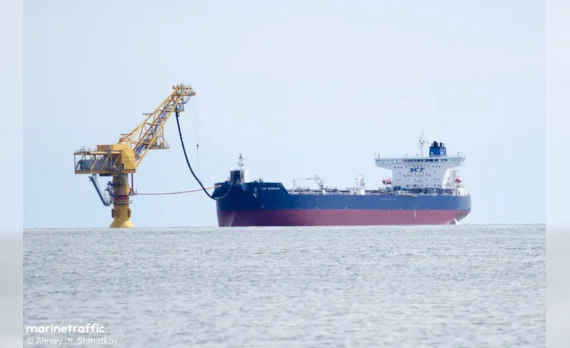
Shadow Fleet

Marine vessels involved in the transportation of sanctioned oil
Total number:
1404
Marine vessels
534
Masters
Updated: 07.05.2026
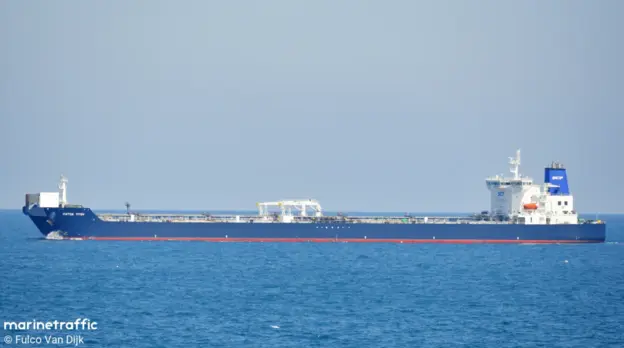
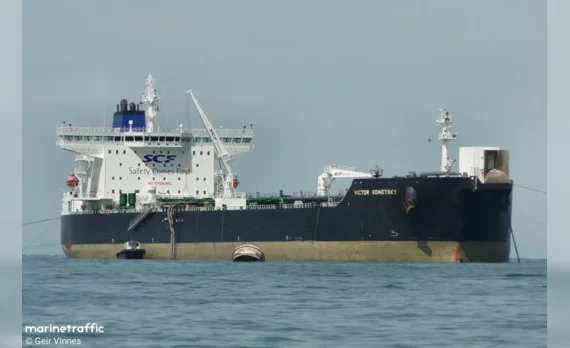
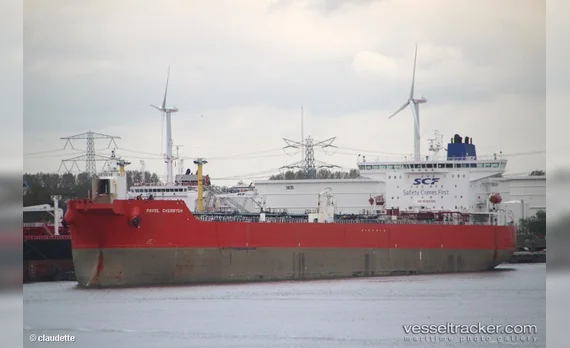
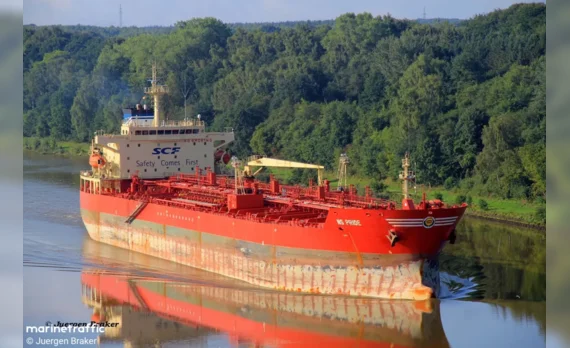
The shadow tanker fleet transports growing volumes of sanctioned oil around the world, generates billions of dollars in revenue for russia and Iran, threatens environmental safety in the oceans, serves as a spy platform, and is used for sabotage activities in the interests of the aggressor.
The sanctioned countries are looking for new markets for oil, building up their tanker fleet to circumvent restrictions, and shipping crude oil mainly to China and India.
The shadow tanker fleet with a total deadweight of more than 100 million tons (approximately 17% of the world`s oil tanker fleet) consists of more than a thousand mostly outdated, poorly maintained vessels without proper insurance, with ‘confusing’ ownership and management structures located in ‘friendly’ jurisdictions, under ‘convenient’ flags. Such vessels resort to deceptive tactics at sea to conceal the origin of their cargo, threaten ‘environmental chaos’ and billions of dollars in losses to coastal countries by passing through busy, narrow international transportation routes without pilotage. Since the beginning of russia`s full-scale invasion of Ukraine, shadow tankers have already been involved in more than 50 incidents from the Danish Straits to Malaysia.


Category
Sanctions
 
 
DWT: 88 516 тис.тоннTotal: 854
CRIUS
Vessel name
CRIUS
IMO
9251274
Flag (Current)
Panama Panama
Vessel Type
Crude Oil Tanker
Category
Transportation of fossil fuels in violation of sanctions and other restrictions
icon arrow-tree Transporting russian crude oil / petroleum products
The tanker is involved in the export of sanctioned russian crude oil/oil products from russian ports in the Baltic sea (Ust-Luga, Primorsk) mainly to India, the Pacific region (Kozmino) to China, and resorts to deceptive, highly exploitative practices with the disabling of AIS near Malaysia, russia.The tanker called at a russian port where the price of oil was constantly exceeding the price cap of $60 per barrel of russian oil.
The international NGO Greenpeace refers to the tanker as a shadow fleet of tankers transporting russian oil around the world and threatening the environment.
The tanker is also involved in the transportation of Iranian oil and petroleum products.
On January 10, 2025, USA imposed sanctions on the vessel.
On February 24, 2025, the United Kingdom imposed sanctions on the vessel.
On February 24, March 04, 2025 EU and Switzerland respectively imposed sanctions on the tanker for transporting crude oil/oil products originating in or exported from russia using irregular and high-risk shipping practices as specified in the International Maritime Organization General Assembly resolution A.1192 (33); promoting or supporting actions/policies aimed at the exploitation, development or expansion of the energy sector in russia, including energy infrastructure (EU sanctions will enter into force on February 25, 2025).
In June 2025, Canada imposed sanctions on the vessel.
In June 2025, Australia imposed sanctions on the vessel.
Since October 30, 2025, New Zealand has imposed sanctions on the tanker.
Since December 13, 2025, Ukraine has imposed sanctions on the vessel.
On February 21, 2026, Ukraine imposed sanctions on the master of the vessel.
View profile
PANDA
Vessel name
PANDA
IMO
9284582
Flag (Current)
unknown
Vessel Type
Crude Oil Tanker
Category
Transportation of fossil fuels in violation of sanctions and other restrictions
icon arrow-tree Transporting russian crude oil / petroleum products
Since August 2022, the tanker has been involved in the export of russian oil, engaged in dark activities in the Baltic Sea near the port of Ust-Luga (October 2024), near Oman (October 2022, May 2023), Indonesia (July, December 2022).
According to the American human rights group United Against Nuclear Iran (UANI), which monitors Iranian-related tanker traffic using satellite data, the vessel was involved in the transportation of Iranian oil and has switched to transporting russian oil since 2022. Since the beginning of russia's full-scale invasion of Ukraine in February 2022, more than 90 vessels that previously helped Tehran export Iranian export oil are now helping russia transport russian oil/oil products. In May 2022, UANI first predicted that russia would turn to a 'ghost armada' to ensure oil flows to its Chinese partner.
The international public organization Greenpeace refers to the tanker as a shadow fleet of tankers transporting russian oil around the world and threatening the environment.
On January 10, 2025, USA imposed sanctions on the vessel.
On May 20, 2025, the EU imposed sanctions, which enter into force on May 21, 2025, on the tanker for the transportation of crude oil/petroleum products originating in or exported from russia, using irregular high-risk shipping practices as specified in the International Maritime Organization General Assembly Resolution A.1192(33).
On June 03, 2025, the sanctions imposed by Switzerland on the vessel came into force.
On July 21, 2025, the United Kingdom imposed sanctions on the vessel.
Since October 30, 2025, New Zealand has imposed sanctions on the tanker.
In November 2025, Canada imposed sanctions on the vessel.
Since December 13, 2025, Ukraine has imposed sanctions on the vessel.
On February 21, 2026, Ukraine imposed sanctions on the master of the vessel.
View profile
ALBA
Vessel name
ALBA
IMO
9268112
Flag (Current)
unknown
Vessel Type
Crude Oil Tanker
Category
Transportation of fossil fuels in violation of sanctions and other restrictions
icon arrow-tree Transporting russian crude oil / petroleum products
During the period of the G7 and EU oil embargo and the price-cap policy on russian oil, the tanker is involved in the export of russian oil from ports in the Baltic, Black seas, and the Pacific region, mainly to China. The tanker resorts to deceptive tactics at sea (changing identifiers or manipulating its location), conducting dark activities at sea with the AIS signal turned off near the russian port of Taman (russia), Iran, Indonesia, Saudi Arabia, Malaysia, Vietnam.
The international NGO Greenpeace refers to the tanker as part of a shadowy fleet of tankers transporting russian oil around the world and threatening the environment.
According to the data of United Against Nuclear Iran (UANI), which monitors Iran-related tanker traffic using satellite data, the vessel was involved in the transportation of Iranian oil and has switched to transporting russian oil since April 2022. Since the beginning of russia's full-scale invasion of Ukraine in February 2022, more than 100 vessels that previously helped Tehran export Iranian export oil are now helping russia transport russian oil/oil products.
The tanker is linked to an attempt to supply sanctioned Iranian oil to the EU (Croatia) in 2022, obtained through ship-to-ship transshipment near Malaysian waters.
On January 10, 2025, USA imposed sanctions on the vessel.
From July 20, 2025, the EU imposed sanctions on a tanker for transporting crude oil/petroleum products that originate in russia or are exported from russia using irregular and high-risk shipping practices as set out in the International Maritime Organization General Assembly resolution A.1192 (33).
On August 12, 2025, Switzerland imposed sanctions on the vessel.
Since September 12, 2025, the United Kingdom has imposed sanctions on the vessel.
In November 2025, Canada imposed sanctions on the vessel.
Since December 13, 2025, Ukraine has imposed sanctions on the vessel.
View profile
MIN HANG
Vessel name
MIN HANG
IMO
9257137
Flag (Current)
unknown
Vessel Type
Crude Oil Tanker
Category
Transportation of fossil fuels in violation of sanctions and other restrictions
icon arrow-tree Transporting russian crude oil / petroleum products
In 2024, the tanker is involved in the export of russian crude oil to third countries from russian ports in the Baltic Sea and the Pacific region.
The tanker is also involved in the transportation of Iranian oil.
Tanker IMO 9257137 is linked to anonymous Chinese buyers who spent approximately $376 million on the purchase of a group of 13 tankers for high-risk transportation of crude oil of russian origin. Among these 13 tankers are seven VLCCs, five Aframaxes, and one Suezmax. The vessels were purchased through 20 separate but interconnected single-vessel shell companies from Hong Kong and the PRC.
Subsequently, all but one of the tankers were engaged in transshipment of wet cargo in international waters, in areas 860 nautical miles west of Portugal.
On December 03, 2024, USA imposed sanctions on the tanker.
Since May 21 and June 3, 2025, the EU and Switzerland, respectively, have imposed sanctions on the vessel for transporting crude oil/petroleum products originating in or exported from rRussia, using irregular shipping practices with a high degree of risk, as specified in Resolution A.1192(33) of the General Assembly of the International Maritime Organization.
On July 21, 2025, the United Kingdom imposed sanctions on the vessel.
In November 2025, Canada imposed sanctions on the vessel.
In early January 2026, the tanker MIN HANG (IMO 9257137), as part of a group of tankers, attempted to leave Venezuelan waters in dark mode (with AIS transponders turned off) to bypass the US blockade as part of Operation Southern Spear. After the US detained another vessel from this group (OLINA (IMO 9282479)) on January 9, 2026, the tanker MIN HANG (IMO 9257137) and two other vessels (THALIA III (IMO 9259197) and MEROPE (IMO 9281891)) returned to Venezuelan waters. All of these tankers were loaded with oil belonging to the sanctioned Venezuelan state oil company PDVSA.
Since December 13, 2025, Ukraine has imposed sanctions on the vessel.
On February 21, 2026, Ukraine imposed sanctions on the master of the vessel.
View profile
IZUMO
Vessel name
IZUMO
IMO
9249324
Flag (Current)
unknown
Vessel Type
Crude Oil Tanker
Category
Transportation of fossil fuels in violation of sanctions and other restrictions
icon arrow-tree Transporting russian crude oil / petroleum products
During the period of the G7 and EU oil embargo and the price-cap policy on russian oil, the tanker is involved in the export of russian oil from russian ports in the Pacific region mainly to China, conducting dark activities at sea near Oman and Malaysia, and conducting deceptive practices related to the identification/location of the vessel.
The international NGO Greenpeace refers to the tanker as part of the shadow fleet of tankers transporting russian oil around the world and threatening the environment.
According to the USA-based human rights group United Against Nuclear Iran (UANI), which monitors Iran-related tanker traffic using satellite data, the vessel was involved in the transportation of Iranian oil and has switched to transporting russian oil since December 2022. Since the beginning of russia's full-scale invasion of Ukraine in February 2022, more than 90 vessels that previously helped Tehran export Iranian export oil are now helping russia transport russian oil/oil products. In May 2022, UANI first predicted that russia would turn to a 'ghost armada' to ensure oil flows to its Chinese partner.
The tanker is involved in the transportation of oil products on behalf of Sepehr Energy Jahan Nama Pars Company (Sepehr Energy, under USA sanctions), controlled by the General Staff of the Iranian Armed Forces, for the network of sanctioned financial official Houthi Saeed al-Jamal, which has provided tens of millions of dollars in illicit oil revenues to support the financing of Houthi attacks on commercial shipping in the Red Sea. At the same time, the tanker is affiliated with Gemini Marine Limited (under USA sanctions).
On October 02, 2024, USA sanctions were imposed on the vessel as a property in which Gemini Marine Limited has an interest.
Since December 13, 2025, Ukraine has imposed sanctions on the vessel.
View profile
ELISE
Vessel name
ELISE
IMO
9277747
Flag (Current)
Cameroon Cameroon
Vessel Type
Oil Products Tanker
Category
Transportation of fossil fuels in violation of sanctions and other restrictions
icon arrow-tree Transporting russian crude oil / petroleum products
The tanker during the period of the G7 and EU oil embargo and the price cap policy on russian crude oil/petroleum products is involved in the export of russian crude oil/petroleum products to third countries, including the use of deceptive practices (disabling AIS, conducting dark activities in the Gulf of Finland, the russian ports of Novorossiysk and Baltiysk).
According to the United Against Nuclear Iran (UANI), the vessel was involved in the transportation of Iranian oil and since May 2022 has switched to the transportation of russian oil. Since the beginning of russia's full-scale invasion of Ukraine in February 2022, more than 100 vessels that previously helped Tehran export Iranian export oil are now helping russia transport russian crude oil/petroleum products.
On May 09, 2025, the United Kingdom imposed sanctions on the tanker as part of the introduction of restrictions on the shadow fleet of the russian federation, including for engaging in activities whose purpose or effect is to destabilize Ukraine, undermine/threaten the territorial integrity, sovereignty or independence of Ukraine or to benefit from or support the russian government, or to participate in the transportation of crude oil/petroleum products of russian origin, in particular from russia to a third country.
In June 2025, Canada imposed sanctions on the vessel.
From July 20, 2025, the EU imposed sanctions on a tanker for transporting crude oil/petroleum products that originate in russia or are exported from russia using irregular and high-risk shipping practices as set out in the International Maritime Organization General Assembly resolution A.1192 (33).
On August 12, 2025, Switzerland imposed sanctions on the vessel.
In August 2025, Ukraine imposed sanctions on the tanker's master.
Since September 18, 2025, Australia has imposed sanctions on the vessel.
Since December 13, 2025, Ukraine has imposed sanctions on the vessel.
View profile
KOEN
Vessel name
KOEN
IMO
9199127
Flag (Current)
unknown
Vessel Type
Oil Products Tanker
Category
Transportation of fossil fuels in violation of sanctions and other restrictions
icon arrow-tree Transporting russian crude oil / petroleum products
During the period of the G7, EU oil embargo and price-cap policy on russian oil, the tanker is involved in the export of russian oil, conducting dark activities at sea, and practicing deceptive practices related to the identification/location of the vessel.
The vessel is connected with the facts of supplying crude oil (a refined product) to China in October 2023 (for the needs of a large Shengxing Chemical refinery) under the guise of 'other fuel oil' (a combustion product), which may indicate concealment of the nature/origin of the cargo, avoidance of price caps in certain geographical locations, disguising the real cargo under a different product classification code to conceal its potential use, etc.
Since early 2023, Borey G's voyage history has identified a number of sailing routes between Southeast Asia and mainland China's coastal ports, with several STS activities near Malaysia using crude oil tankers MS Enola and FSO SA Europe.
The vessel is also involved in the transportation of Iranian crude oil and petroleum products. Since russia's full-scale invasion of Ukraine in February 2022, more than 100 vessels that previously helped Iran export oil are now helping russia transport russian crude oil and petroleum products.
Many tankers involved in transporting Iranian oil to countries such as China are also involved in Venezuelan trade, including tanker IMO 9199127. On June 11, 2022, Venezuelan leader Nicolás Maduro and former Iranian President Ebrahim Raisi signed a 20-year cooperation agreement to expand ties in the oil and petrochemical industries, as well as in the military and economic spheres. Since then, bilateral ties have begun to develop. Most cargo is transported by ships belonging to the sanctioned National Iranian Tanker Company (NITC) in both directions. A significant number of ships flying under foreign (non-Iranian) flags are also involved in this trade.
On January 10, 2025, USA imposed sanctions on the vessel.
Since May 21 and June 3, 2025, the EU and Switzerland, respectively, have imposed sanctions on the vessel for transporting crude oil/petroleum products originating in or exported from rRussia, using irregular shipping practices with a high degree of risk, as specified in Resolution A.1192(33) of the General Assembly of the International Maritime Organization.
In June 2025, Canada imposed sanctions on the vessel.
On July 21, 2025, the United Kingdom imposed sanctions on the vessel.
Since December 13, 2025, Ukraine has imposed sanctions on the vessel.
On February 21, 2026, Ukraine imposed sanctions on the master of the vessel.
View profile
BLUE
Vessel name
BLUE
IMO
9236353
Flag (Current)
Cameroon Cameroon
Vessel Type
Crude Oil Tanker
Category
Transportation of fossil fuels in violation of sanctions and other restrictions
icon arrow-tree Transporting russian crude oil / petroleum products
The tanker is involved in the export of russian oil, violating the G7 and EU oil embargo on russian oil in January 2024. In violation of the oil embargo, the vessel transported russian crude oil from the port of Novorossiysk in the Black Sea to the Laconikos Gulf, Greece in January 2024. According to Kpler, on January 28, 2024, the tanker ІМО 9236353 in the Laconikos Gulf of Greece carried out an STS transfer of Urals crude oil exported from the port of Novorossiysk, handing it over to the vessel IMO 9237072. On January 09, 2024, the vessel ІМО 9237072 was recorded by the MarineTraffic ship spotter off the coast of Crete in ballast with a draft of 11.3 m. On January 10, 2024, the tanker sailed to the Laconikos Gulf, where it made an STS transfer on the same day, receiving Urals oil from the vessel IMO 9434890 in the Laconikos Gulf in Greece. According to Kpler, IMO 9434890 was loaded with 729 thousand barrels of Urals oil from the port of Ust-Luga. The second STS transfer to the vessel ІМО 9237072 took place on January 28, 2024 in the Laconikos Gulf from the vessel IMO 9236353 loaded with oil in the port of Novorossiysk. According to Kpler, the vessel IMO 9237072, loaded with russian oil, concealed information about the change in the ship's draft and headed to Venezuela, where it was detected an STS transfer of oil to the vessel IMO 9110183 between February 28 and March 1, 2014, which delivered 600 thousand barrels of russian oil to the Cardon refinery in Venezuela on March 2, 2014.
The international public organization Greenpeace refers to the tanker as a shadow fleet of tankers transporting russian oil around the world and threatening the environment.
Shadow fleet of russia continues to generate multibillion-dollar revenues for the kremlin bypassing sanctions, disguising its activities under the flags of third countries, using complex schemes to conceal owners, and poses significant environmental threats with significant economic costs to coastal countries and/or the international community due to the outdated and inadequate insurance of shadow fleet tankers.
On May 09, 2025, the United Kingdom imposed sanctions on the tanker as part of the restrictions on the shadow fleet of the russian federation, including for engaging in activities aimed at destabilizing Ukraine, undermining/threatening the territorial integrity, sovereignty or independence of Ukraine or benefiting from or supporting the government of russia, and participating in the transportation of crude oil/petroleum products of russian origin, in particular, from russia to a third country.
On May 20, 2025, the EU imposed sanctions, which will enter into force on May 21, 2025, on the tanker for the transportation of crude oil/petroleum products originating in or exported from russia, using irregular high-risk shipping practices as specified in the International Maritime Organization General Assembly Resolution A.1192(33).
On June 03, 2025, the sanctions imposed by Switzerland on the vessel came into force.
In June 2025, Canada imposed sanctions on the vessel.
In August 2025, Ukraine imposed sanctions on the tanker's master.
Since September 18, 2025, Australia has imposed sanctions on the vessel.
Since October 30, 2025, New Zealand has imposed sanctions on the tanker.
Since December 13, 2025, Ukraine has imposed sanctions on the vessel.
View profile
VOLTA RIVER
Vessel name
VOLTA RIVER
IMO
9336414
Flag (Current)
Panama Panama
Vessel Type
Crude Oil Tanker
Category
Cargo transportation from/to ТОТ of Ukraine
icon arrow-tree Calling ports of the TOT
The tanker during the period of the G7+ oil embargo and the price cap policy on russian crude oil/oil products is involved in the export of russian crude oil/oil products, in particular, from russian ports in the Black Sea, delivers russian crude oil from russian ports in the Black Sea to the Gulf of Lakonikos (Greece) for further STS transfers with the supertanker SAATHI (IMO 9402732 of the VLCC type), affiliated with the Indian company Gatik Ship Management, one of the leading operators of the so-called "shadow" fleet involved in the transportation of russian crude oil/oil products under Western sanctions in 2022-2023. Also, in January 2025, an STS transmission was made in the Gulf of Lakonicos with the tanker CHEETAH-II (IMO 9222560), which left the Kerch Strait (port of Kavkaz), where it had been conducting dark activities for a long time, and called at the port of Komysh-Burun (TOT Crimea) in December 2024.
The tanker has been conducting so-called dark activities with AIS disabled in the area of the Kerch Strait, the russian ports of Tuapse and Ust-Luga.
In September 2025, the vessel transported 30,000 tons of russian petroleum products. The cargo was shipped by Rosneft.
Since December 13, 2025, Ukraine has imposed sanctions on the vessel.
On February 21, 2026, Ukraine imposed sanctions on the master of the vessel.
View profile
REGAL I
Vessel name
REGAL I
IMO
9247431
Flag (Current)
Cameroon Cameroon
Vessel Type
Crude Oil Tanker
Category
Transportation of fossil fuels in violation of sanctions and other restrictions
icon arrow-tree Transporting russian crude oil / petroleum products
The tanker during the period of the G7+ oil embargo and the price cap policy on russian crude oil/oil products is involved in the export of russian crude oil/oil products from russian facilities in the Baltic and Black Seas.
The tanker is also involved in the transportation of sanctioned Iranian oil.
Many tankers involved in transporting Iranian oil to countries such as China are also involved in Venezuelan trade, including tanker IMO 9247431. On June 11, 2022, Venezuelan leader Nicolás Maduro and former Iranian President Ebrahim Raisi signed a 20-year cooperation agreement to expand ties in the oil and petrochemical industries, as well as in the military and economic spheres. Since then, bilateral ties have begun to develop. Most cargo is transported by ships belonging to the sanctioned National Iranian Tanker Company (NITC) in both directions. A significant number of ships flying under foreign (non-Iranian) flags are also involved in this trade.
On February 24, 2025, the United Kingdom imposed sanctions on the tanker as part of restrictions on russia's shadow fleet.
Since February 25 and March 4, 2025, respectively, the EU and Switzerland have imposed sanctions on tankers transporting crude oil/petroleum products originating in or exported from russia, using irregular shipping practices with a high degree of risk, as specified in Resolution A.1192 (33) of the General Assembly of the International Maritime Organization.
In June 2025, Canada imposed sanctions on the vessel.
In June 2025, Australia imposed sanctions on the vessel.
Since September 12, 2025, New Zealand has imposed sanctions on the vessel.
On September 25, 2025, a tanker transported 140,000 tons of russian crude oil for export from the Sheskharis terminal in the port of Novorossiysk (russia) to India. The shipper of the cargo was the sanctioned russian company PJSC "Oil Company "Rosneft".
Since December 13, 2025, Ukraine has imposed sanctions on the vessel.
On February 21, 2026, Ukraine imposed sanctions on the master of the vessel.
View profile
To top