


Churinga in the form of a fish with petroglyphs
ID:
5610
Updated:
16.03.2026

Name:
Churinga in the form of a fish with petroglyphs
Author:
Original name:
The country of the work of art:
Date:
VI century BC
Type:
Sculpture
Technique of implementation:
Materials:
Dimensions:
Special labels, markings, signatures:
Location of special signs:
Description:
Churinga was found in 1985 in the "Goat Cave" and is a sculptural image of a fish with a complex system of petroglyphs on the front.
Circumstances:
Stolen from the National Historical and Archaeological Reserve "Stone Tomb" to the territory of Crimea under the guise of a temporary exhibition
Provide additional information
Details of theft
Year of the incident:
2025
Place of the incident:
National Historical and Archaeological Reserve "Stone Tomb"
Coordinates (Lat, Lon):
46.94916210384292, 35.46606313178811
Place of last known stay:
National Reserve "Chersonese Tauride"
Links
Archive links
Description of the incident location
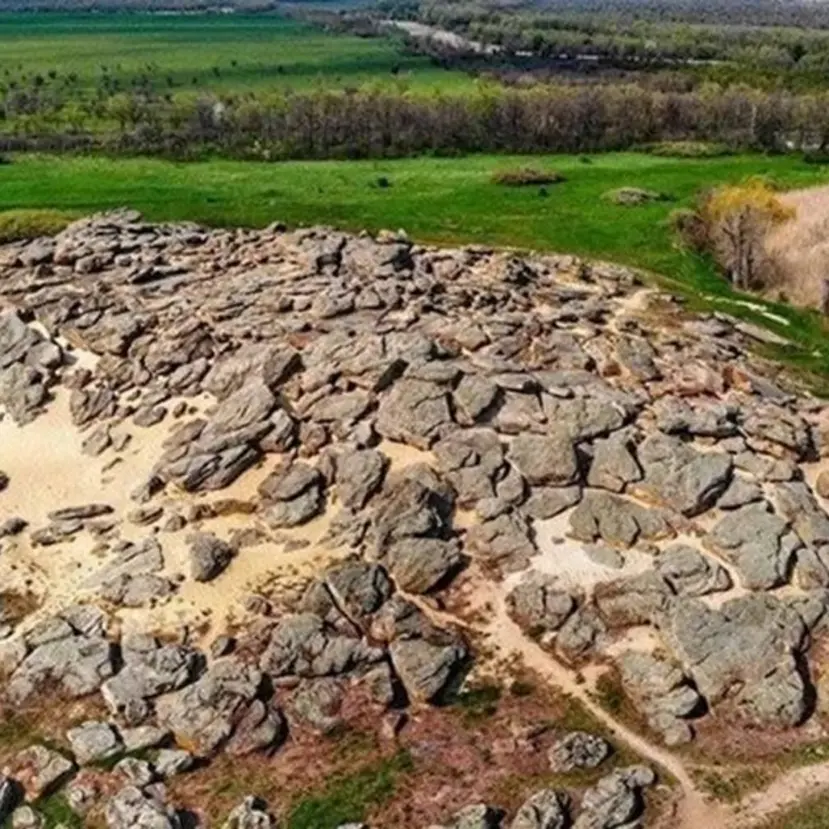
Kamianna Mohyla is a unique natural monument (formed approx. 14-12 million years ago as a result of transformations of the former Sarmatian Sea bottom and nowadays it is a sandstone hill 12 m high with a base area of approx. 3 hectares with caves and grottoes) and a historical monument (in the grottoes and caves there are rock paintings of different epochs: from the Late Paleolithic - 22-20 thousand BC to the Bronze Age - late 2nd - early 1st thousand BC and later). The site is located in the floodplain of the Molochna River, near the village of Terpinia, Melitopol district, Zaporizhzhia region. Since 2001 it has been listed in the State Register of Immovable Monuments of Ukraine. 8 The Stone Tomb has no direct analogues in the world archaeological heritage.
heritage, it is a unique phenomenon in the Eastern European region.
Since 2006, Stone Tomb has been on the UNESCO Tentative List of World Heritage Sites. The Stone Tomb contains 87 grottoes and caves, 65 of which have thousands of petroglyphs - drawings and symbols. The chronology of the petroglyphs covers a huge period from the Late Paleolithic to the Middle Ages (from the XXIV-XX thousand years BC to the X-XII centuries AD).
In September 2008, by Presidential Decree No. 815/2008, the reserve was granted national status. Since then, its official name is the National Historical and Archaeological Reserve "Stone Tomb". In February 2023, the National Reserve "Stone Grave", located in the temporarily occupied Zaporizhzhia region, was illegally annexed as a branch of the so-called FSBIU State Historical and Archaeological Museum-Reserve "Chersonesos Tauric".
heritage, it is a unique phenomenon in the Eastern European region.
Since 2006, Stone Tomb has been on the UNESCO Tentative List of World Heritage Sites. The Stone Tomb contains 87 grottoes and caves, 65 of which have thousands of petroglyphs - drawings and symbols. The chronology of the petroglyphs covers a huge period from the Late Paleolithic to the Middle Ages (from the XXIV-XX thousand years BC to the X-XII centuries AD).
In September 2008, by Presidential Decree No. 815/2008, the reserve was granted national status. Since then, its official name is the National Historical and Archaeological Reserve "Stone Tomb". In February 2023, the National Reserve "Stone Grave", located in the temporarily occupied Zaporizhzhia region, was illegally annexed as a branch of the so-called FSBIU State Historical and Archaeological Museum-Reserve "Chersonesos Tauric".
Provide additional information
