Epitaph of Deidas, son of Heraclides
ID:
5439
Updated:
25.07.2025
Name:
Epitaph of Deidas, son of Heraclides
Author:
Original name:
The country of the work of art:
Date:
I century BC - I century
Type:
Sculpture
Technique of implementation:
Materials:
Dimensions:
Special labels, markings, signatures:
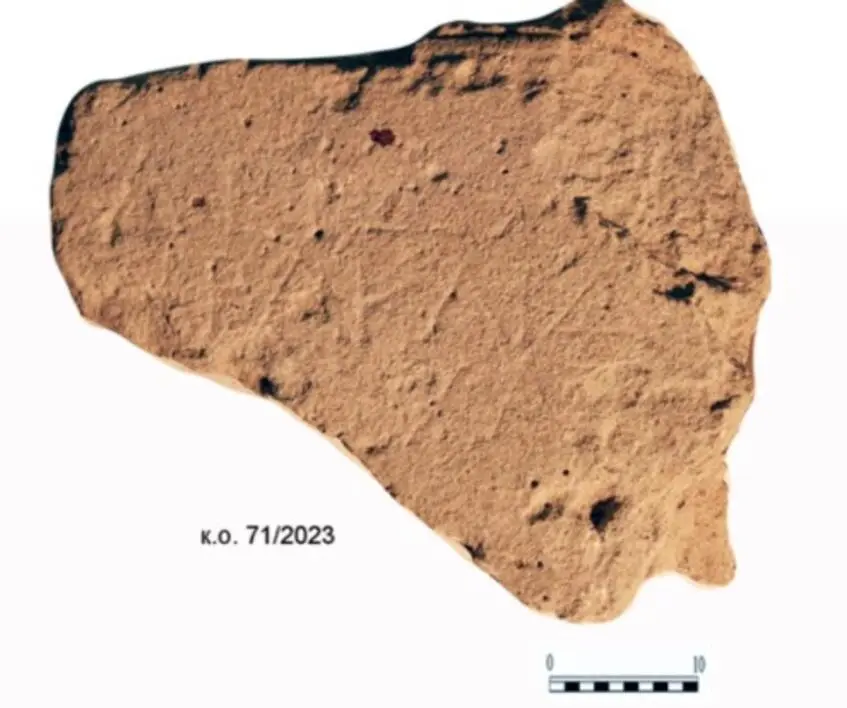
71/2023
Location of special signs:
Description:
The obverse side is covered with salt deposits, text: Δείδα[ς] │ Ἡρακλίδ[ου] │ χα[ῖρε] "Deidas, son of Heraclitus, farewell". The lettering of the epitaph is clear, the lines are straight, the letters are large, and their ends are neatly apicated. The text of lines 1 and 3 is small, so the letters are widely spaced, and in general they are characterized by expanded proportions, including in line 2. The first delta is tall, with a narrowed base, while the others, on the contrary, have a wider base and are not tall in proportion. Alpha has a broken gasta, the tongue E is slightly removed from the mast, all three tongues are apiculate. The Kappa is elegant with its antennae - their rise is small relative to the vertical of the mast, the upper one is elongated, the lower one is shortened.
Circumstances:
Аppropriated by representatives of the russian federation during illegal excavations of cultural heritage sites of Ukraine
Provide additional information
Details of theft
Year of the incident:
2023
Place of the incident:
Monument of archeology "Settlement Artesian"
Coordinates (Lat, Lon):
45.396363, 36.167072
Place of last known stay:
Links
Archive links
Description of the incident location
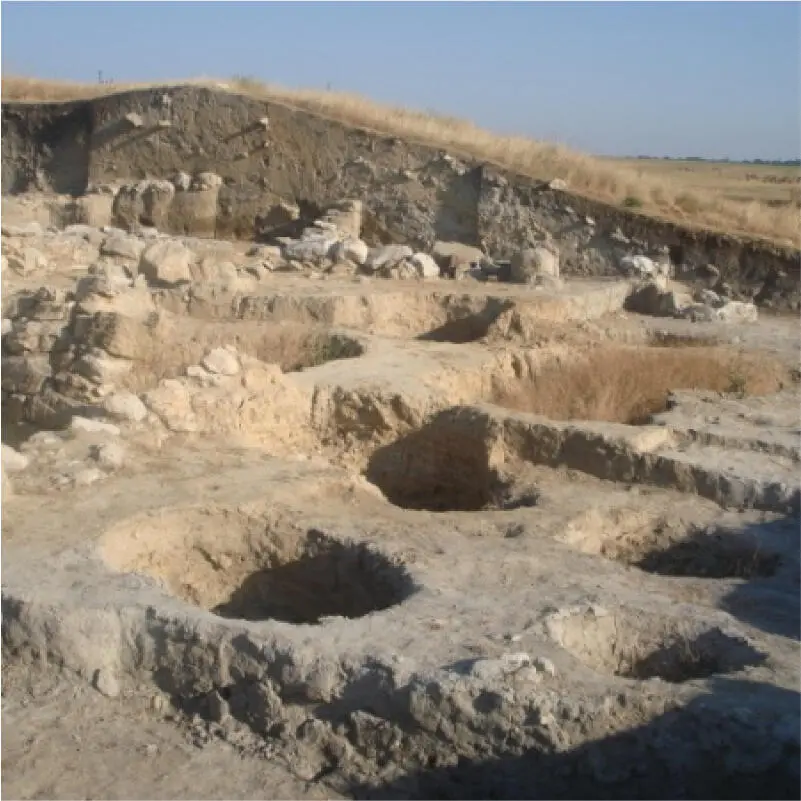
The Artesian settlement is a unique multi-layered monument with a very complex stratigraphy. According to experts, the ancient city of Parosta, mentioned by Pliny in the first century AD and Claudius Ptolemy in the second century AD, was located on its site. Since the russian occupation of Crimea in March 2014, excavations at the site have been carried out unilaterally by the russian side in violation of Ukrainian law. In 2014, by the decision of russian President Putin, the settlement and the Artesian necropolis were included in the "Eastern Crimean Historical and Cultural Reserve" (ECHCR). The protected area was to cover an area of 146 hectares and unite an ensemble of monuments from the Bronze Age to the late Middle Ages.
Provide additional information