


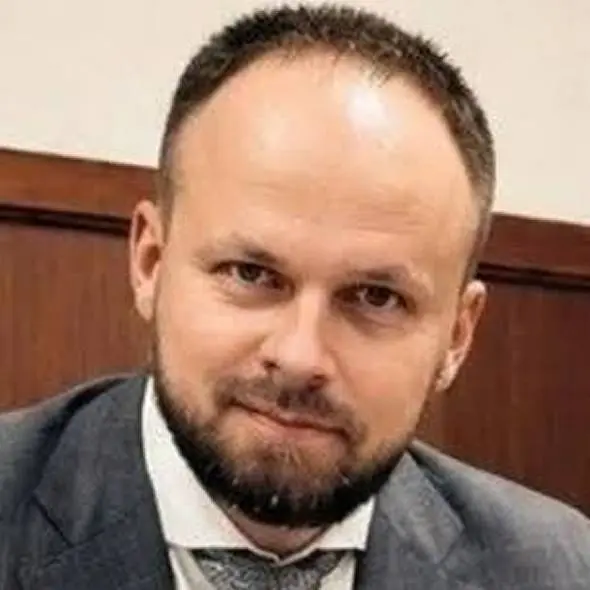
KLESCHEV/KLESCHOV Alexei Konstantinovich
Provide additional information
Name
КЛЕЩЕВ/КЛЕЩОВ Олексій Костянтинович
КЛЕЩЕВ Алексей Константинович
KLESCHEV/KLESCHOV Alexei Konstantinovich
КЛЕЩЕВ Алексей Константинович
KLESCHEV/KLESCHOV Alexei Konstantinovich
Date and place of birth
09.07.1983
Borisoglebsk, Voronezh оblast, RSFSR, USSR
Borisoglebsk, Voronezh оblast, RSFSR, USSR
Citizenship
russian federation
TIN
773471464203
Position
russian government official
deputy head of the federal agency "rossotrudnichestvo"
former employee of the russian president's offices for public projects and for strategic partnership and cooperation
deputy head of the federal agency "rossotrudnichestvo"
former employee of the russian president's offices for public projects and for strategic partnership and cooperation
Reasons
A russian civil servant and FSB lieutenant colonel, he has served as deputy director of the federal agency "rossotrudnichestvo" since June 26, 2026.
According to a journalistic investigation by The Insider dated February 13, 2026, Kleschev previously served in the FSB’s 16th Center (military unit 71330), which specializes in electronic intelligence, specifically the interception, decryption, and processing of electronic communications. He was later transferred to the department for public projects of the russian president’s administration, where he was responsible for African affairs, and in late 2025, to the newly created department for strategic partnerships and cooperation. According to the publication, Kleschev attended a closed-door seminar for department staff dedicated to methods of applying russian "soft power" in the post-soviet space and in Africa. During the seminar, claims were made about an alleged "resurgence of neo-nazism" in Ukraine and the Baltic states, as well as a "totalitarian dictatorship" in Moldova.
In July 2026, he publicly spoke in support of the "russian World" concept as the foundation of the russian federation’s international positioning. In his speech, he referred to russia as a distinct civilization and to putin as one of the country’s main symbols in the world. He also claimed that abroad, there is allegedly no distinction made between russian state and ethno-cultural identities, emphasizing the concepts of the "russian world," russian civilization, and the promotion of the russian language and education.
He called for leveraging the russian federation’s historical, cultural, and technological achievements to foster a positive perception of the country among foreign audiences.
On July 18, 2026, he announced plans to restructure the overseas network of "russian houses," which, in his words, are to become "centers of high-tech, modern representation of russia." He emphasized the need to revise the approaches to the work of these representative offices and expand their activities beyond traditional cultural events. In October 2026, he announced that the agency was introducing digital services at its overseas centers to promote russian technologies and shape the image of the russian federation as a technologically advanced state.
In October 2026, Kleschev presented the policy of expanding the "rossotrudnichestvo" network in African countries. In particular, during the first meeting of the russian-Togolese Intergovernmental Commission in Lomé (Togo), he stated that the agency would continue to expand its international presence despite the alleged "hostile policies of certain Western governments."
Links

Sanction Jurisdictions
USA

Canada
Switzerland
EU
UK
Australia
New Zealand
Japan
Ukraine
 Date of entry and reference to the document
 The country has not yet applied sanctions
Provide additional information
