


In the studio / V maisterni
ID:
4271
Updated:
22.01.2025
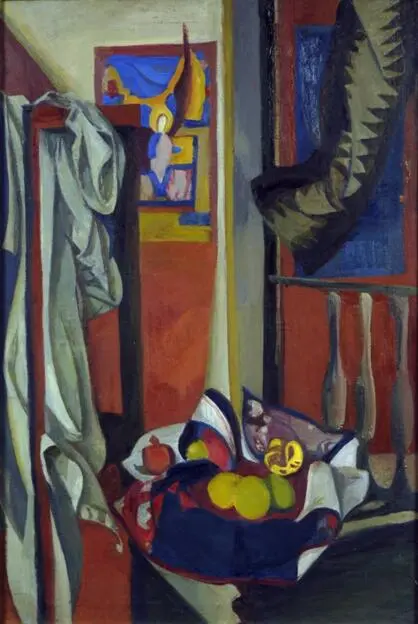
Name:
In the studio / V maisterni
Author:
Lavinia Bazhbeuk-Melikian
Original name:
The country of the work of art:
Date:
1981
Type:
Painting
Technique of implementation:
Painting, Still-life
Materials:
Canvas, oil
Dimensions:
80x120 sm
Special labels, markings, signatures:
Ж – 988, КП – 3329
Location of special signs:
On the back on canvas or on a stretcher
Description:
The interior of the workshop. In the foreground, in the centre of the table, there is a blue napkin with a red edge and wrapped edges. There are 3 oranges and pomegranates on it. To the left of the table is a grey cloth draped over a stretcher. The image is set against a red wall with a painting hanging on the left. The painting is painted in blue, yellow, and red colours. To the right is a window with a grey-brown curtain that is developing. On the canvas, the top right is painted in black and blue: "L. Bazhbeuk-Melikyan "In the studio" 1980. 120х80". The stretcher has a sticker of the Exhibition Directorate of the Union of Artists of the USSR on the top left: "Bazhbeuk-Melikyan In the studio 7807", red paint: "7707 DV SSSR", in black paint: "DV SX USSR NO. 7807". There is a paint slump at the bottom right and top right, and a dent.
Circumstances:
It was taken out of the Kherson Art Museum by representatives of the russian federation
Provide additional information
Details of theft
Year of the incident:
2022
Place of the incident:
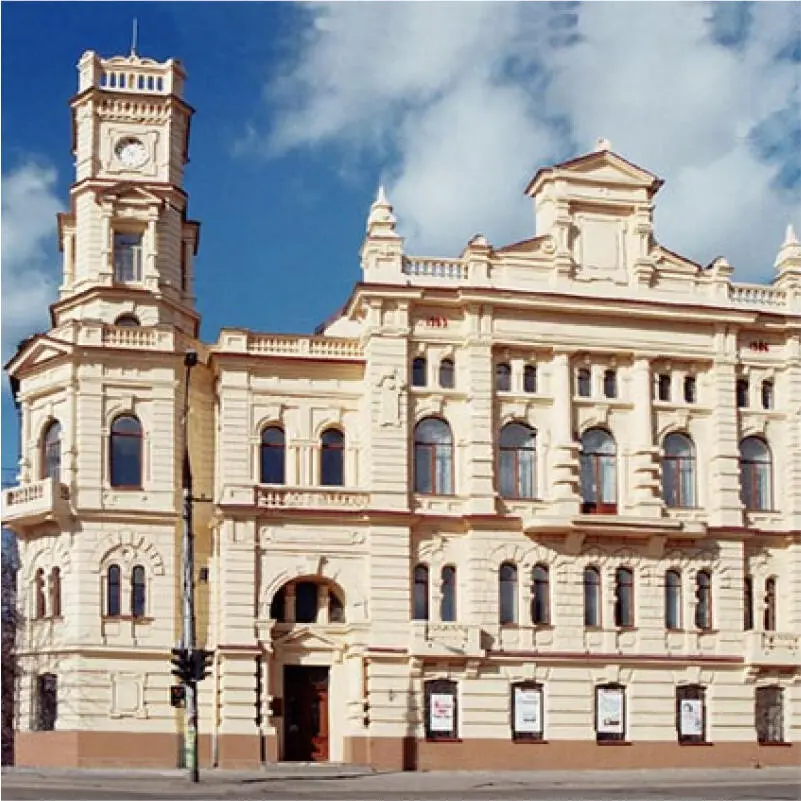
The Oleksii Shovkunenko Kherson Regional Art Museum
Coordinates (Lat, Lon):
46.62979067231111, 32.609546919505945
Place of last known stay:
Links
Archive links
Description of the incident location
It was opened on May 27, 1978, in the former City Hall building, an architectural monument of the early 20th century. As of 2022 (before the robbery), the museum's collection included more than 13 thousand works of art and was one of the most interesting museum collections in Ukraine. It includes works of Ukrainian and foreign painting, graphics, sculpture, and decorative and applied arts. From October 31 to November 4, 2022, the Kherson Art Museum was looted by the russian occupiers, and more than 10,000 of its most valuable exhibits were stolen. The cargo was sent to Crimea, and the works (all or part of them) ended up in the Simferopol Central Museum of Tavrida. It is unknown whether everything is still there.
Provide additional information
